

A 19 inch case is a standardised metal cabinet or enclosure designed to hold and organise various pieces of electronic equipment, following a standard that the front panel measures 19 inches wide.
Depending on the style and size of the 19 inch case frames, racking is used to create cabinets, enclosures and server units for a wide variety of industries, such as audio visual, performing arts, live broadcast and events, telecommunications, data centres and IT services as well as home installation for home entertainment and smart home systems.

Why Choose Us?
01
Rich Experience
Shenzhen Hongfa Shunda Mould Co.,Ltd is a manufacturer of plastic and hardware molds and enclosures,located in Shenzhen China,and have more than 20 years industry experience.
02
Complete Product Range
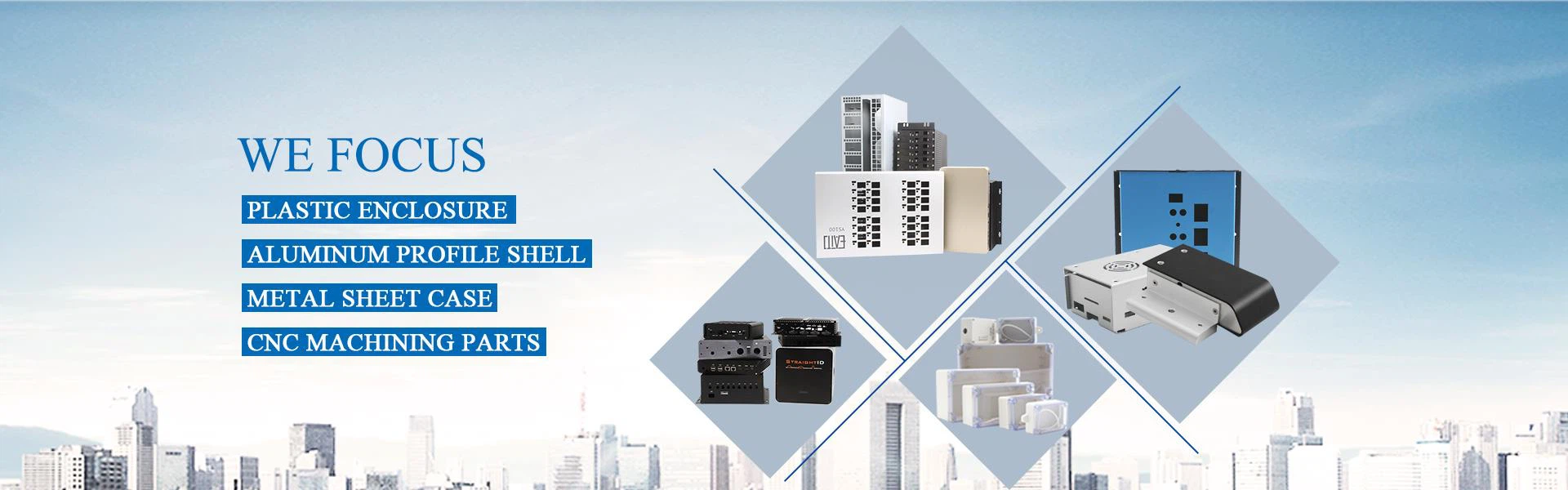
Our main products include: plastic injection molds,plastic enclosures,aluminum extruded box,sheet metal enclosures,die casting aluminum case,waterproof junction box,CNC milled parts etc.
03
Professional Team
With a team of professional engineers, we can design plastic moulds and all kinds of sheet metal enclosure structure. Professional sales team can service customers well.
04
Custom Service
The company supply OEM/ODM custom service for electronic enclosure,include design,drawing, cut holes,surface treatment,printing,packing etc.
-
![Custom Sheet Metal Enclosure]() Custom Sheet Metal EnclosureQuick details:view more
Custom Sheet Metal EnclosureQuick details:view more
Product: Custom Sheet metal enclosure
Model: 1u rack case
Dimension: 44*482.6*200mm
Material: aluminum and steel
Thickness: 3mm aluminum and 1.0mm... -
![1u Rack Case Server Chassis Metal Enclosure]() 1u Rack Case Server Chassis Metal Enclosure1u rack case server chassis Metal enclosure.Adhering to the 19-inch rack specification, these compact server housings stand just 44.45mm (1U) tall with standardized 482.6mm width. Depth...view more
1u Rack Case Server Chassis Metal Enclosure1u rack case server chassis Metal enclosure.Adhering to the 19-inch rack specification, these compact server housings stand just 44.45mm (1U) tall with standardized 482.6mm width. Depth...view more -
![19 Inch Rack Case Amplifier Case Box Sheet Metal Fabrication]() 19 Inch Rack Case Amplifier Case Box Sheet Metal Fabrication1U chassis is a server/network equipment enclosure that complies with the 19-inch rack standard, with a height of 1.75 inches (44.45mm), a width of 482.6mm (19 inches), and a depth of 400mm~800mm...view more
19 Inch Rack Case Amplifier Case Box Sheet Metal Fabrication1U chassis is a server/network equipment enclosure that complies with the 19-inch rack standard, with a height of 1.75 inches (44.45mm), a width of 482.6mm (19 inches), and a depth of 400mm~800mm...view more -
![4u Rack Mount Server Chassis]() 4u Rack Mount Server ChassisThe 4u case made of aluminium and steel material,the front panel is 3.0mm aluminum,and top and bottom cover are 1.0mm steel.Powder coating in black color.Have standard samples in stock.view more
4u Rack Mount Server ChassisThe 4u case made of aluminium and steel material,the front panel is 3.0mm aluminum,and top and bottom cover are 1.0mm steel.Powder coating in black color.Have standard samples in stock.view more -
![Customized 2U Rockmounted SPCC Steel Chassis]() Customized 2U Rockmounted SPCC Steel Chassis2U Server Chassis: The NF-RACK1400D-2U 2U-Chassis is a 19-Inch rack mountable conversion center, capable of serving up to 14 media conversion modules. In addition to the internal power supply,...view more
Customized 2U Rockmounted SPCC Steel Chassis2U Server Chassis: The NF-RACK1400D-2U 2U-Chassis is a 19-Inch rack mountable conversion center, capable of serving up to 14 media conversion modules. In addition to the internal power supply,...view more -
![3U SPCC Steel Chassis]() 3U SPCC Steel Chassis3U Server Chassis Discover our range of 3U server chassis, expertly crafted from high-quality materials including iron, aluminum, SPCC, and SGCC steel. These industrial-grade rackmount...view more
3U SPCC Steel Chassis3U Server Chassis Discover our range of 3U server chassis, expertly crafted from high-quality materials including iron, aluminum, SPCC, and SGCC steel. These industrial-grade rackmount...view more -
![Industrial 19" Rackmount Server Case 1U/2U3U/4U case]() Industrial 19" Rackmount Server Case 1U/2U3U/4U caseA 19-inch rack mount server chassis is a sturdy, metal enclosure designed to protect and house server equipment within a standardized rack system. Constructed from durable sheet metal, it offers...view more
Industrial 19" Rackmount Server Case 1U/2U3U/4U caseA 19-inch rack mount server chassis is a sturdy, metal enclosure designed to protect and house server equipment within a standardized rack system. Constructed from durable sheet metal, it offers...view more -
![19 Inch Enclosure Server Case Rack Mount Shell 2U]() 19 Inch Enclosure Server Case Rack Mount Shell 2UAluminum enclosures rack mount for PC, controller or amplifier.view more
19 Inch Enclosure Server Case Rack Mount Shell 2UAluminum enclosures rack mount for PC, controller or amplifier.view more -
![19inch 1U Iron Chassis Box Cases]() 19inch 1U Iron Chassis Box CasesThis is a Black Iron 1U chassis made of Iron. We are a factory have over 20 years experience in the product of electronic shell. We have excellent quality and competitive price. Hope we can...view more
19inch 1U Iron Chassis Box CasesThis is a Black Iron 1U chassis made of Iron. We are a factory have over 20 years experience in the product of electronic shell. We have excellent quality and competitive price. Hope we can...view more -
![19 Inch Metal 1U Rack Case]() 19 Inch Metal 1U Rack CaseQuick Details:view more
19 Inch Metal 1U Rack CaseQuick Details:view more
1. Product Name: 1u rack case
2. External Size: 44*482.6*200mm or custom
3. Material: Front 3.0mm aluminum, other part 1.0mm steel
4. Finish: Powder... -
![19Inch Metal Box 1u/2u/3u/4u/5u Rack Mount Case]() 19Inch Metal Box 1u/2u/3u/4u/5u Rack Mount CaseThis is a black electronic chassis box made of Iron. We are a factory have over 20 years experience in the product of electronic shell. We have excellent quality and competitive prices. Hope we...view more
19Inch Metal Box 1u/2u/3u/4u/5u Rack Mount CaseThis is a black electronic chassis box made of Iron. We are a factory have over 20 years experience in the product of electronic shell. We have excellent quality and competitive prices. Hope we...view more -
![2.5U Server Rack Mount 19inch Case Box]() 2.5U Server Rack Mount 19inch Case BoxThis is a black electronic chassis box made of Iron. We are a factory have over 20 years experience in the product of electronic shell. We have excellent quality and competitive prices. Hope we...view more
2.5U Server Rack Mount 19inch Case BoxThis is a black electronic chassis box made of Iron. We are a factory have over 20 years experience in the product of electronic shell. We have excellent quality and competitive prices. Hope we...view more


Benefits of 19 Inch Cases for Housing Server Equipment
● Efficient space utilization in data centers: Accommodate a lot of apparatus in a relatively small area due to vertical mounting inside the server furniture. A standard 19″ 42u 600×600mm wiring closet with standard 19 inch case mount dimensions occupies only 0.36 m², and more than 30 standard 1U devices can be installed in this small area.
● High reliability and durability: Some models can withstand loads of up to 800 kg. For example, TWT cabinets of the business series allow mounting and securely fixing devices that have a standard 19″ mount. These cabinets are designed to adhere to 19 rack dimensions mm, ensuring compatibility and robustness.
● Simplified installation process: Simplify the process of installing computing devices. One person can cope with the task in a matter of minutes, and, if necessary, disassemble the equipment. Besides, no special tools are required.
● Access control and security: Make it possible to both limit and delimit access to certain equipment and systems, due to being equipped with doors with latches.
● Protection against environmental factors: Allow protecting the stored devices from moisture and electromagnetic radiation, as well as from dust, dirt, and other debris. Protection against electromagnetic radiation is ensured by the installation of a metal door and a protective earthing device.
● Excellent designs and ergonomics: There are floor-standing, wall-mounted, portable models that can be installed even on office premises if required, offering flexibility and aesthetic appeal.
Not All 19 Inch Cases Are Created Equal


A 19 inch case is an industry standard, as defined by the Electronic Industries Alliance (EIA). The designation means that the rack is designed for mounting standard 19 inch casemount equipment including servers, routers, switches, and uninterruptible power supply (UPS) systems, as well as audio/video, monitoring, and communications equipment.
To choose the best 19 inch case for your application, keep these considerations in mind:
Consider all rack dimensions. The 19-inch dimension of a 19 inch case refers to the width between the mounting rails inside the rack — not the width of the actual enclosure itself. Most severs fit into this 19-inch space; however, some larger servers do require 23-inch racks.
Beyond the width of the servers supported, 19 inch cases have other important dimensions to consider. Where the racks will be deployed and how much equipment will be inside will help you determine the best height, width, and depth of your rack enclosure. It's a good idea to make sure your rack provider offers 19 inch cases in a variety of different sizes to meet your needs.
Height: A standard server rack cabinet is typically 42 to 48U, which is 2000-2265 millimeters (mm) or 78.6-89.2 inches in height. However, racks can be customized to be even taller, which may be important in locations where floor space is at a premium and you want to take advantage of vertical space. On the other hand, in edge locations, 19 inch cases are often shorter, and can be as compact as 6 to 12U if there is not much equipment that needs to be housed within the rack.
Width: 19 inch cases are usually 600-800 mm (23.6-31.5 inches) wide. The wider the rack, the more room there is on either side of the mounting rails for things like switches or cable routing and management. Wider racks are becoming more common, especially as rack densities increase.
Depth: Most 19 inch cases are 1100-1200 mm (43.3-47.8 inches) deep. The depth you need often depends on cabling access and power distribution requirements. Newer server rack cabinets come with adjustable mounting rails allowing you to place the rails at a shorter depth if needed. However, as IT manufacturers make their equipment more dense, devices are becoming deeper. This reduces the space in the rear of the rack needed for cable management and airflow. Deeper racks alleviate this issue.
Understand the difference between standard and optional accessories. Depending on the rack manufacturer, you may have to specify everything you want on your rack beyond the mounting rails themselves. This can become tedious if basics like wheels and doors are considered optional accessories that you have to add and specify. Before you choose a rack, be sure you understand what comes standard with the part number you're ordering.
19 inch case are an essential form factor used in various industries to house electronic equipment. These cases are designed to mount electronic devices in a standard-sized rack cabinet, allowing for easy installation and maintenance of multiple devices side-by-side.
● Size and Configuration
The 19 inch case computer case is designed to fit into a standard rack cabinet. The rack cabinet is a metal frame with mounting holes spaced 19 inches apart, which allows for easy installation of multiple devices side-by-side. The rack computer case must be the correct size and configuration to fit the rack cabinet and accommodate the electronic device.
● Material Selection
The material used to manufacture a 19 inch case mount enclosure is an important design consideration. Common materials include steel, aluminum, and plastic. Steel is a popular choice due to its durability and strength, while aluminum is often used when weight is a concern. Plastic is commonly used for non-industrial applications, such as audio or video equipment.
● Cooling and Ventilation
Electronic devices generate heat during operation, and a 19 inch case server case must provide adequate cooling to prevent overheating. The case may have fans, vents, or other cooling mechanisms to dissipate heat and maintain a safe operating temperature. It's essential to consider the device's heat output and airflow requirements when selecting a server rack mount case.
● Mounting Options
The 19 inch case must have mounting options to secure the electronic device within the case. Common mounting options include brackets, rails, and screws. These mounting options must be sturdy enough to hold the device in place, even during transportation or other movement.
● Accessibility
Accessibility is an essential design aspect of 19 inch cases. The case must provide easy access to the electronic device's controls, connectors, and ports. The case may have removable panels or doors to provide access or allow for maintenance and repairs.
Designing a successful 19 inch case requires attention to size and configuration, material selection, cooling and ventilation, mounting options, and accessibility. By considering these critical design aspects, designers can ensure that electronic devices remain functional and accessible while mounted in a rack cabinet. Ultimately, a well-designed 19 inch case can make a significant difference in the overall performance and reliability of electronic equipment.

● Check the Weight capacity:
The user needs to know the weight of the equipment that customers house within the 19 inch case. Then, he will be able to choose the 19-inch frame accordingly. All the racks have a maximum load limit. The maximum load they can carry is known when they are out for sale. However, the user will need to find out whether the distribution of the weight is even. In some cases, the build of the top or the bottom of the 19 inch case is for handling extra weight.
● Size of cabinet:
The user needs to consider why he is buying a 19 inch case practically. Some users need the extra space to allow cables to flow out of the cabinet.. Others are passionate about the size of the server rack. A much smaller office would have sufficed for them.
What Factors Should You Consider Before Organizing 19 Inch Case Cable Management
Rack Specification
The vast majority of IT applications use 19 inch cases. The depth of the rack is usually adjustable to some degree. The height of the rack is divided into standardized segments called rack units ("U"), and each rack unit (1U) is 1.75 inches high. A 42U rack contains 42 rack units. It does mean that the rack will accommodate any combination of standard rack equipment up to 42U. Therefore, the first step is to choose a suitable 19 inch case for your data center.
19 inch case Layout
Plan the layout of your 19 inch case before mounting all of the equipment is of critical importance in today's high-density rack environments. You need to determine what components to be housed in the rack and map out the blueprint that corresponds to where you are planning to mount each component on the rack. This step can prevent the frustration of having to move equipment after it has been mounted.
Equipment Location
The location of equipment in the rack is vital to maximize the space inside the rack and to permit easy service. You should develop a detailed plan for equipment placement before you install it, including plans for future expansion. Generally, the heaviest equipment is placed in the bottom of the rack, UPS systems and external battery packs, larger servers.
Cabling Distribution
The patch panel is always used for rack cabling distribution, which potentially allows for the use of larger switches and higher utilization of ports. An alternative approach is to install network switches in the rack and use the switch layer itself as the patching system, but the patching function is limited. In terms of cabling, the patch panel is nothing but essential cable management tool to wire cables together. The 24-port patch panel is the most common options used on the rack. It is a perfect combination between the patch panel and cable management bar to reduce cable tension in the rack. For high-density cabling system, other cable management tools, including horizontal and vertical cable manager, cable tie, cable label, are also considered.
Cooling
As the density of equipment in the rack increases, cooling becomes an important factor. The heat concentrations can lead to increased power consumption and higher rates of equipment failure. Besides, unmanaged cabling could block airflow and prevent efficient cold air distribution. In this sense, using horizontal and vertical cable managers to organize patch cables and power cords is also very helpful for cooling efficiency.
Our Factory
Shenzhen Hongfa Shunda Mould Co.,Ltd is a manufacturer of plastic and hardware molds and enclosures,located in Shenzhen China,and have more than 20 years industry experience.
Mainly engaged in the design, production and sales of electronic enclosures, providing one-stop enclosure solutions for electronic products.
Our main products include: plastic injection molds,plastic enclosures,aluminum extruded box,sheet metal enclosures,die casting aluminum case,waterproof junction box,CNC milled parts etc.


Our Certificate




FAQ
We're professional 19 inch case manufacturers and suppliers in China, specialized in providing high quality custom service. We warmly welcome you to wholesale hot sale 19 inch case at competitive price from our factory.
sheet metal fabrication for countertops, sheet metal fabrication for resonators, sheet metal fabrication for transistors
