

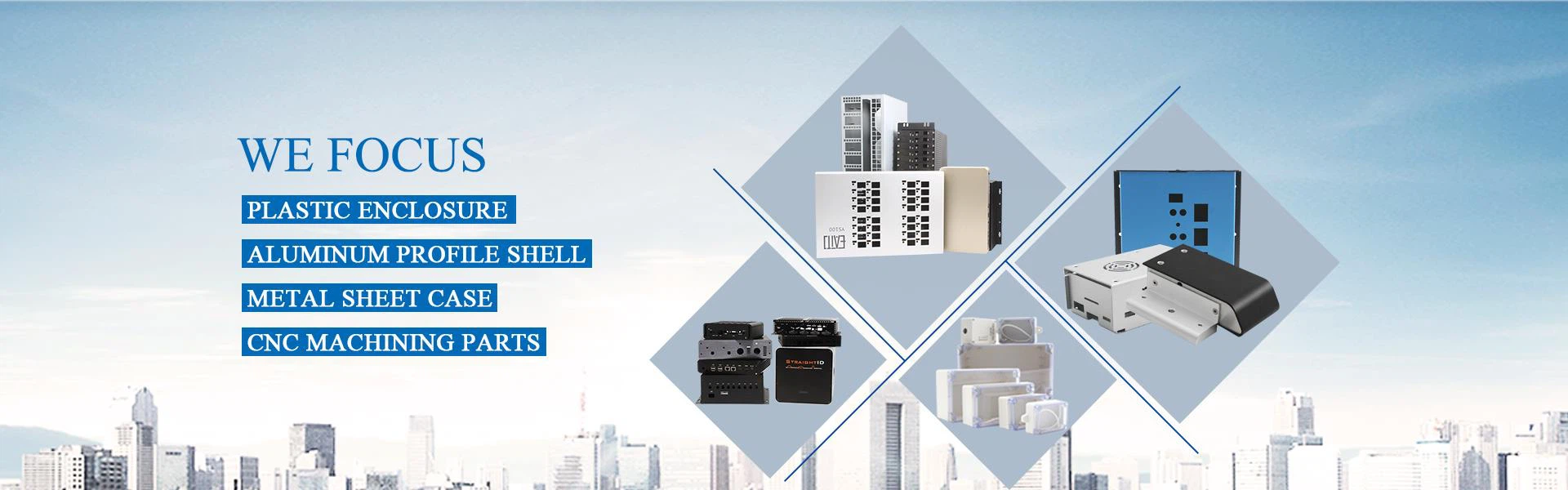
Sheet metal fabrication refers to the turning of flat metal sheets into metal products and structures. Typically, this technique involves transforming different types of sheet metals into parts and components. It is also a versatile process that can create a wide range of metal components made from Aluminum, Steel, Stainless Steel, Copper, and Brass.

Why choose us
01
Our Factory
Hongfa Shunda, located in Shenzhen, China, has a 5,000 square meter production facility that includes plastic injection production lines and CNC milling production lines.
02
Production Equipment
The company has several production lines and pieces of equipment, including injection machines, CNC machines, bending machines, laser cutting machines, and punching machines.
03
Production Market
Our products are sold all over the world, especially in North America, Western Europe, Asia, and Oceania.
04
Our Services
The company provides OEM/ODM custom services for electronic enclosures, including design, drawing, hole cutting, surface treatment, printing, and packing.
-
![Custom Sheet Metal Enclosure]() Custom Sheet Metal EnclosureQuick details:view more
Custom Sheet Metal EnclosureQuick details:view more
Product: Custom Sheet metal enclosure
Model: 1u rack case
Dimension: 44*482.6*200mm
Material: aluminum and steel
Thickness: 3mm aluminum and 1.0mm... -
![1u Rack Case Server Chassis Metal Enclosure]() 1u Rack Case Server Chassis Metal Enclosure1u rack case server chassis Metal enclosure.Adhering to the 19-inch rack specification, these compact server housings stand just 44.45mm (1U) tall with standardized 482.6mm width. Depth...view more
1u Rack Case Server Chassis Metal Enclosure1u rack case server chassis Metal enclosure.Adhering to the 19-inch rack specification, these compact server housings stand just 44.45mm (1U) tall with standardized 482.6mm width. Depth...view more -
![19 Inch Rack Case Amplifier Case Box Sheet Metal Fabrication]() 19 Inch Rack Case Amplifier Case Box Sheet Metal Fabrication1U chassis is a server/network equipment enclosure that complies with the 19-inch rack standard, with a height of 1.75 inches (44.45mm), a width of 482.6mm (19 inches), and a depth of 400mm~800mm...view more
19 Inch Rack Case Amplifier Case Box Sheet Metal Fabrication1U chassis is a server/network equipment enclosure that complies with the 19-inch rack standard, with a height of 1.75 inches (44.45mm), a width of 482.6mm (19 inches), and a depth of 400mm~800mm...view more -
![4u Rack Mount Server Chassis]() 4u Rack Mount Server ChassisThe 4u case made of aluminium and steel material,the front panel is 3.0mm aluminum,and top and bottom cover are 1.0mm steel.Powder coating in black color.Have standard samples in stock.view more
4u Rack Mount Server ChassisThe 4u case made of aluminium and steel material,the front panel is 3.0mm aluminum,and top and bottom cover are 1.0mm steel.Powder coating in black color.Have standard samples in stock.view more -
![Aluminum Raspberry PI 4 Case Enclosure]() Aluminum Raspberry PI 4 Case EnclosureRaspberry Pi is a single-board computer that was developed for educational purposes. It is a small-sized device that is capable of performing various tasks, from browsing the web to playing games...view more
Aluminum Raspberry PI 4 Case EnclosureRaspberry Pi is a single-board computer that was developed for educational purposes. It is a small-sized device that is capable of performing various tasks, from browsing the web to playing games...view more -
![Customized 2U Rockmounted SPCC Steel Chassis]() Customized 2U Rockmounted SPCC Steel Chassis2U Server Chassis: The NF-RACK1400D-2U 2U-Chassis is a 19-Inch rack mountable conversion center, capable of serving up to 14 media conversion modules. In addition to the internal power supply,...view more
Customized 2U Rockmounted SPCC Steel Chassis2U Server Chassis: The NF-RACK1400D-2U 2U-Chassis is a 19-Inch rack mountable conversion center, capable of serving up to 14 media conversion modules. In addition to the internal power supply,...view more -
![3U SPCC Steel Chassis]() 3U SPCC Steel Chassis3U Server Chassis Discover our range of 3U server chassis, expertly crafted from high-quality materials including iron, aluminum, SPCC, and SGCC steel. These industrial-grade rackmount...view more
3U SPCC Steel Chassis3U Server Chassis Discover our range of 3U server chassis, expertly crafted from high-quality materials including iron, aluminum, SPCC, and SGCC steel. These industrial-grade rackmount...view more -
![Industrial 19" Rackmount Server Case 1U/2U3U/4U case]() Industrial 19" Rackmount Server Case 1U/2U3U/4U caseA 19-inch rack mount server chassis is a sturdy, metal enclosure designed to protect and house server equipment within a standardized rack system. Constructed from durable sheet metal, it offers...view more
Industrial 19" Rackmount Server Case 1U/2U3U/4U caseA 19-inch rack mount server chassis is a sturdy, metal enclosure designed to protect and house server equipment within a standardized rack system. Constructed from durable sheet metal, it offers...view more -
![Factory Suppliers Aluminum Extruded Electronic Housing Electronic Devices]() Factory Suppliers Aluminum Extruded Electronic Housing El...Customized rack mounted metal chassis for medical,electonic equipment and ect.view more
Factory Suppliers Aluminum Extruded Electronic Housing El...Customized rack mounted metal chassis for medical,electonic equipment and ect.view more -
![Aluminum Sheet Metal Enclosure Hongfa Case]() Aluminum Sheet Metal Enclosure Hongfa CaseQuick Details:view more
Aluminum Sheet Metal Enclosure Hongfa CaseQuick Details:view more
1. Model Number: HF-C-11
2. External Size: 80*215*190mm
3. Material: Aluminum alloy
4. Protection Level: IP54
5. Finish: Powder coating or... -
![19 Inch Enclosure Server Case Rack Mount Shell 2U]() 19 Inch Enclosure Server Case Rack Mount Shell 2UAluminum enclosures rack mount for PC, controller or amplifier.view more
19 Inch Enclosure Server Case Rack Mount Shell 2UAluminum enclosures rack mount for PC, controller or amplifier.view more -
![19inch 1U Iron Chassis Box Cases]() 19inch 1U Iron Chassis Box CasesThis is a Black Iron 1U chassis made of Iron. We are a factory have over 20 years experience in the product of electronic shell. We have excellent quality and competitive price. Hope we can...view more
19inch 1U Iron Chassis Box CasesThis is a Black Iron 1U chassis made of Iron. We are a factory have over 20 years experience in the product of electronic shell. We have excellent quality and competitive price. Hope we can...view more


sheet metal fabrication including metal stamping,bending,welding,riveting etc.The metal case can be customized as required.there're also some standard 19 inch rack mount case in stock for testing.
Sheet Metal Fabrication Benefits
Sheet metal parts offer several benefits that make them a popular choice in various industries. Here are some key advantages of using sheet metal parts:
High Strength
Metal, especially steel, offers excellent structural integrity and can withstand heavy loads and harsh environments. Sheet metal parts are ideal for automotive, construction, and industrial equipment.
Malleable
Sheet metal is easy to mold and form into various shapes while maintaining its structural integrity during the fabrication process. This malleability makes it popular for applications in building designs.
Durable
Sheet metal materials can hold high-pressure levels and resist corrosion and degradation caused by exposure to sunlight, water, moisture, and other environmental factors.
Lightweight
Despite their robustness, sheet metal components are relatively lightweight compared to solid metal blocks or castings. This advantage is crucial in applications where weight reduction is essential, such as in the aerospace and automotive industries, contributing to improved fuel efficiency and overall performance.
Versatility in Design
Sheet metal fabrication allows for significant design flexibility. It can be easily cut, bent, and shaped into complex forms, offering designers the freedom to create parts with intricate geometries, resulting in customized and aesthetically pleasing components.
Cost-Effective
Raw materials, such as steel or aluminum sheets, are generally less expensive than solid blocks or castings. Additionally, sheet metal fabrication processes, such as laser cutting and CNC bending, have become more efficient and automated, reducing labor costs and increasing production rates.
High Accuracy and Precision
Sheet metal fabrication techniques have advanced significantly with the use of computer-aided design (CAD) software and computer numerical control (CNC) machines, allowing for precise cutting, bending, and forming operations. This accuracy ensures consistent dimensions and tight tolerances, which are crucial in industries where precise fit and functionality are required.
Rapid Prototyping
With computer-controlled machines and efficient production setups, it is possible to quickly produce prototypes or small batches of sheet metal parts. This agility is particularly beneficial for industries that require fast product development cycles or have changing design requirements.
Short Lead Times
Sheet metal fabrication encompasses a range of processes. Working with a full-service contract manufacturer that handles fabrication, finishing, and assembly can drastically shorten lead times.
Recyclable and Sustainable
Sheet metal parts, especially those made from materials like steel or aluminum, are highly recyclable. These parts can be recycled and reused to produce new sheet metal components, reducing environmental impact and promoting sustainability.
Techniques Used In Sheet Metal Fabrication


Sheet metal fabrication is the process of transforming flat sheet metal into components or structures with a desired shape and size. This can be achieved through various processes, such as the following:
Cold Forming: This process involves bending metal sheets along an axis to create complex shapes that require intricate details.
Punching: Punching presses are used to create holes in thin sheets of material at high speed, ensuring precise dimensions without creating any burrs on the surface.
Bending: This technique allows for more complicated geometries to be formed from sheet metals by using dies that provide guidance on how much bend should be applied in each area.
Welding: Welding is commonly used to join two pieces together due to its stronger bond compared to other methods of joining materials, such as mechanical fasteners or adhesives.
Cold Rolling: This process creates a flat surface on the metal by passing it between two rollers with varying forces applied. Cold rolling helps shape the metal into its desired form while maintaining consistent thickness across all areas of the material.
Laser Cutting: This technique utilizes an intense beam of light to cut through the metal at specific points, creating intricate designs or precise cuts with minimal effort.
Hydroforming: Hydroforming uses high-pressure hydraulic fluids to mold sheets of metal into predetermined shapes without distorting their structure.
Types of Sheet Metal Fabrication Materials
There are numerous types of sheet metals available that are suitable for various fabrication processes. The primary metals available include:
Steel – Al four classifications of steel are prominent for robust strength, ductility, and resistance to corrosion
Aluminum – A relatively lightweight metal with high strength
Magnesium – A shiny, lightweight, and strong metal with low density making it adequate for structures that require stiffness
Bronze – A very high ductile metal with a low melting point
Copper – A soft and malleable metal with heat and electrical conductivity
How Sheet Metal fabrication optimizes manufacturing
Sheet metal fabrication optimizes manufacturing by enabling a smooth transition from design to actual product. Precision manufacturing is now the emerging industrial standard, and with the integration of computers and programmable machines, the exact sequence, material input, and final product output can be predicted. Gone are the days of having to machine a product through trial and error. Computer-aided design provides a clear visual of the expected result, with machines executing each step in production precisely.
The advantages of these tools include faster turnaround time, more efficient processes, and better scheduling capabilities of manufacturers. High standards of quality are maintained if robots are used to produce products, versus humans. Since machines never tire, paused only for maintenance, operations are continuous, with identical output at each stage. The process is truly a win-win for the customer and the manufacturer.
Key Types of Sheet Metal Fabrication Processes
Various sheet metal fabrication techniques enable the conversion of flat metal sheets into intricate and functional components, each tailored to specific needs and applications. These techniques can be broadly categorized into cutting, bending, and joining processes.

Cutting Techniques
The cutting process involves reducing sheet metals into more manageable pieces or tailored shapes.
Sheet Metal Laser Cutting: This method offers precision and can quickly cut through sheet metal.
Water Jet Cutting: This provides a cold-cutting method, ideal for heat-sensitive materials.
Plasma Cutting: A versatile technique suitable for various metals, enabling the formation of sheet metal without excessive heat.
Punching: This process creates precise holes, slots, or patterns within the metal, often in high-volume scenarios. It is especially useful when specific patterns or ventilation spaces are required, or when components need to fit together with bolts or other fasteners.
Bending Processes
Sheet metal forming is a significant aspect, and bending comes into play to sculpt sheet metal into its intended shape. This process involves the strategic exertion of force to compel the metal to bend at specific angles. Various bending techniques are employed to achieve the necessary bends and folds:
Air Bending: In this technique, the metal is bent using a punch and die, with a small gap between them. The material is pressed into the die, taking on the desired shape without the punch making direct contact with the metal. This method allows for flexibility and ease of adjustment, making it suitable for a wide range of bending angles.
Bottom Bending: Also known as "bottoming," this method involves bending the sheet metal by forcing it against the bottom of a die cavity with the punch. It is commonly used when precise and consistent angles are required, ensuring that the metal conforms closely to the shape of the die.
Coining: This bending technique produces extremely precise and sharp bends. It involves applying a significant amount of force to the metal, resulting in a tight and well-defined bend. Coining is often used to create intricate shapes and achieve a high level of precision in the final product.


Joining Methods
After the cutting and shaping stages, the joining process involves bringing together individual sheet metal pieces into a unified structure.
Welding: A common fabrication technique, welding fuses metals through heat, joining two sheet metal components. When properly executed, it can provide superior strength compared to riveting or adhesives.
Riveting: This mechanical fastening approach is fast, reliable, low-cost, and requires low technical skill. It provides a sturdy connection between sheet metal pieces.
Adhesives: Industrial glues or adhesive tapes are often chosen for their aesthetic finish (hidden bonding lines, no visible welds or fasteners) and can offer exceptional bonding strength. However, they are generally seen as less resistant to mechanical stresses and lack the long-term reliability of fasteners or welding.
Types of Metal Materials Used in Sheet Metal Fabrication
Different types of metals are used in sheet metal fabrication, each offering unique advantages. The choice of material significantly influences the performance and durability of the final product.
Carbon Steel: Known for its strength and durability, carbon steel is often used in sheet metal fabrication for heavy-duty applications. It is less expensive than stainless steel or aluminum by weight, although it requires additional finishing to avoid rusting and corrosion. Mild carbon steels are most commonly used, but a range of alloys is available with varying strengths and costs.
Hot Rolled Steel: Processed at high temperatures, this type of steel is free from internal stresses that can arise from quenching or work-hardening. It has a rough surface texture and is typically used in applications where finish isn't a primary concern. Its main advantages are cost-effectiveness and ease of fabrication.
Cold Rolled Steel: Processed further than hot-rolled steel, cold-rolled steel is made by taking hot-rolled steel and refining it to create a smoother surface finish. It offers tighter tolerances and a more refined look, making it suitable for more visible applications. Additionally, it is stronger than hot-rolled steel due to the extra processing.
Galvanized Steel: Coated with a protective layer of zinc, galvanized steel is more durable and long-lasting than carbon steels, as the zinc prevents oxygen and water from reaching the steel. It is commonly used in applications where limited exposure to moisture is expected, but it lacks the level of corrosion resistance offered by stainless steel or advanced surface treatments.
Stainless Steel: Highly resistant to corrosion, stainless steel is suitable for outdoor applications and in environments where exposure to moisture is a concern.
Aluminum: Lightweight yet strong, aluminum is commonly used in applications where weight is critical, such as in the aviation and automotive industries.

Common Applications Of Sheet Metal Fabrication
Sheet metal fabrication finds its place in countless applications across various industries. Here are some of the most common uses:
Automotive Industry
Sheet metal is extensively used in the automotive industry to create body panels, chassis, and other structural components. Its durability and formability make it an ideal material for this purpose.
01
Aerospace Industry
In the aerospace sector, sheet metal is used to manufacture aircraft components, including fuselage panels, wings, and engine parts. The lightweight nature of materials like aluminum is particularly advantageous here.
02
Construction Industry
From HVAC systems to roofing and structural components, sheet metal plays a crucial role in the construction industry. Its versatility and strength are key factors in its widespread use.
03
Electronics and Electrical Industry
Sheet metal is used to create enclosures, brackets, and other components in the electronics and electrical industry. Copper, in particular, is prized for its excellent conductivity.
04
Three Types of Fabrication Techniques Used in Sheet Metal
The beauty of sheet metal lies in its adaptability, which is largely due to the various fabrication techniques available. Let’s explore three key methods used when working with sheet metal.
Stamping: This is a process where a die is pressed into the sheet metal to create the desired shape. This technique is widely used in sheet metal manufacturing due to its ability to produce high volumes of the same piece efficiently.
Bending or Folding: This technique involves the deformation of sheet metal along a straight line. The metal is strained by a punch to a bend angle and bend radius. The precision sheet metal fabrication process often employs computer-controlled press brakes for this purpose.
Cutting: As discussed earlier, cutting involves the division of the sheet metal into smaller pieces or sections. Different methods such as shearing, laser cutting, or plasma cutting can be used depending on the requirements.
Choosing the Right Sheet Metal Fabrication Process
The right sheet metal fabrication process is pivotal to the success of your project. Careful consideration of the metal type, fabrication technique, finishing options, and production requirements will guide you in making informed decisions.
1. Types of Metals and Their Properties
Before delving into the intricacies of sheet metal fabrication, it’s essential to grasp the properties of different types of metals. Each metal has distinct physical and chemical properties, such as tensile strength, corrosion resistance, and conductivity, influencing its suitability for specific applications.
Common materials include:
Carbon Steel: Carbon steel is commonly processed through methods like laser cutting, plasma cutting, and machining for intricate designs, while press brake bending and welding are effective for shaping and assembling components.
Stainless Steel: Known for its corrosion resistance, stainless steel is often processed through laser cutting, waterjet cutting, and precision machining for accurate shapes without compromising its corrosion-resistant properties.
Mild Steel: Mild steel is versatile and can be efficiently processed through various methods such as laser cutting, press brake bending, and welding, making it adaptable to a wide range of fabrication techniques.
Aluminum: Valued for its lightweight properties, aluminum is commonly processed through methods like laser cutting, waterjet cutting, and CNC machining for precision, while press brake bending ensures accurate shaping without compromising its inherent properties.
2. Material Thickness and Design Requirements
In the design phase, consider the sheet thickness required for your project. Different processes accommodate various thicknesses, so understanding your design requirements is crucial. Additionally, consider factors like bend radius, which impacts the ease of bending and the final appearance of the finished product.
3. Volume Production and Cost
When considering volume production and cost, it’s essential to align the manufacturing processes with the project’s scale. Laser cutting, efficient for small batches, ensures precision in intricate designs. For mass production, methods like press brake bending prove more economical due to faster cycle times. Evaluate the cost-effectiveness of each method based on the production runs required, balancing efficiency with economies of scale to optimize overall project costs.
4. Quality Standards and Tolerances
Adhering to stringent quality standards and tolerances is paramount in the fabrication process. Select a method that aligns with the precision requirements of your industry. For precision components, meeting tight tolerances is crucial, and the chosen fabrication process must seamlessly integrate with the dimensional specifications outlined in your design.
5. Assembly Requirements
When selecting a fabrication method, it is crucial to consider assembly requirements, especially for projects involving intricate assemblies. Opt for a method that aligns with and facilitates the intended assembly process. Compatibility with welding, fastening, or other joining methods should be a key consideration to ensure ease of putting the pieces together. By strategically choosing a fabrication method that integrates well with assembly requirements, you enhance efficiency, reduce assembly time, and contribute to the overall success of your project.
Our Factory
Shenzhen Hongfa Shunda Mould Co.,Ltd is a manufacturer of plastic and hardware molds and enclosures,located in Shenzhen China,and have more than 20 years industry experience.
Mainly engaged in the design, production and sales of electronic enclosures, providing one-stop enclosure solutions for electronic products.
Our main products include: plastic injection molds,plastic enclosures,aluminum extruded box,sheet metal enclosures,die casting aluminum case,waterproof junction box,CNC milled parts etc.


FAQ
We're professional sheet metal fabrication manufacturers and suppliers in China, specialized in providing high quality custom service. We warmly welcome you to wholesale hot sale sheet metal fabrication at competitive price from our factory.
sheet metal fabrication for printed circuit boards, sheet metal fabrication for pressure vessels, galvanized sheet metal fabrication
