


In the realm of electronic equipment, the choice of enclosure is crucial for ensuring the stability and reliability of the devices. Among various enclosure materials, metal enclosure boxes have gained significant popularity due to their excellent mechanical properties and, importantly, their anti - static performance. As a metal enclosure box supplier, I am well - versed in the intricacies of this topic and eager to share in - depth knowledge about the anti - static performance of metal enclosure boxes.
Understanding Static Electricity and Its Hazards
Before delving into the anti - static performance of metal enclosure boxes, it is essential to understand what static electricity is and why it poses a threat to electronic devices. Static electricity is an imbalance of electric charges within or on the surface of a material. It can be generated through various processes, such as friction, contact, and separation of different materials.
In the context of electronic equipment, static electricity can cause a multitude of problems. When a static discharge occurs, it can generate a high - voltage pulse that may damage sensitive electronic components. This can lead to malfunctions, data corruption, and even permanent failure of the equipment. Moreover, static electricity can attract dust and other contaminants, which can further degrade the performance of the electronic devices over time.
How Metal Enclosure Boxes Provide Anti - Static Protection
Conductivity
One of the primary reasons metal enclosure boxes offer excellent anti - static performance is their high electrical conductivity. Metals, such as aluminum and steel, are good conductors of electricity. When static charges accumulate on the surface of a metal enclosure box, they can quickly dissipate through the metal structure. This is because electrons can move freely within the metal lattice, allowing the charges to spread out and neutralize.
For example, if a person touches a metal enclosure box with a static charge on their body, the charge will flow from the person to the metal box. The metal box then distributes the charge evenly across its surface and can be grounded if the box is properly connected to a grounding system. This rapid dissipation of static charges prevents the buildup of high - voltage static electricity, reducing the risk of electrostatic discharge (ESD) events.
Shielding Effect
In addition to conductivity, metal enclosure boxes also provide a shielding effect against external electrostatic fields. The metal acts as a Faraday cage, which is a conductive enclosure that blocks external electric fields. When an external electrostatic field is present, the free electrons in the metal move to the surface of the enclosure, creating an opposing electric field that cancels out the external field inside the box.
This shielding effect is particularly important for protecting sensitive electronic components from external static interference. For instance, in a manufacturing environment where there are many sources of static electricity, such as conveyor belts and plastic materials, a metal enclosure box can shield the electronic equipment inside from the harmful effects of these external static fields.
Factors Affecting the Anti - Static Performance of Metal Enclosure Boxes
Surface Finish
The surface finish of a metal enclosure box can have a significant impact on its anti - static performance. A smooth and clean surface finish allows for better charge dissipation compared to a rough or dirty surface. Rough surfaces can trap static charges in small crevices and irregularities, making it more difficult for the charges to spread out and dissipate.
Moreover, certain surface treatments can enhance the anti - static properties of the metal. For example, applying a conductive coating to the surface of the metal enclosure box can improve its electrical conductivity and reduce the electrostatic charge buildup. Some conductive coatings contain materials such as carbon or metal particles that provide additional pathways for the static charges to flow.

Grounding
Proper grounding is essential for maximizing the anti - static performance of a metal enclosure box. Grounding provides a low - resistance path for the static charges to flow safely to the ground. If a metal enclosure box is not properly grounded, static charges can accumulate on the box, increasing the risk of ESD events.
When installing a metal enclosure box, it is important to ensure that it is connected to a reliable grounding system. This can be achieved by using grounding wires or straps to connect the box to a grounding point, such as a building's electrical ground. Additionally, regular inspections should be carried out to ensure that the grounding connection remains intact and the resistance is within the acceptable range.
Metal Type
Different types of metals have different electrical conductivities, which can affect the anti - static performance of the enclosure box. Aluminum is a popular choice for metal enclosure boxes due to its relatively high conductivity, lightweight, and corrosion resistance. Steel is another commonly used metal, which offers high strength and durability but may have slightly lower conductivity compared to aluminum.
The choice of metal also depends on the specific requirements of the application. For example, in applications where weight is a critical factor, such as in aerospace or portable electronic devices, aluminum enclosure boxes may be preferred. In contrast, in applications where high strength and durability are required, such as in industrial equipment, steel enclosure boxes may be a better choice.
Our Product Range and Their Anti - Static Features
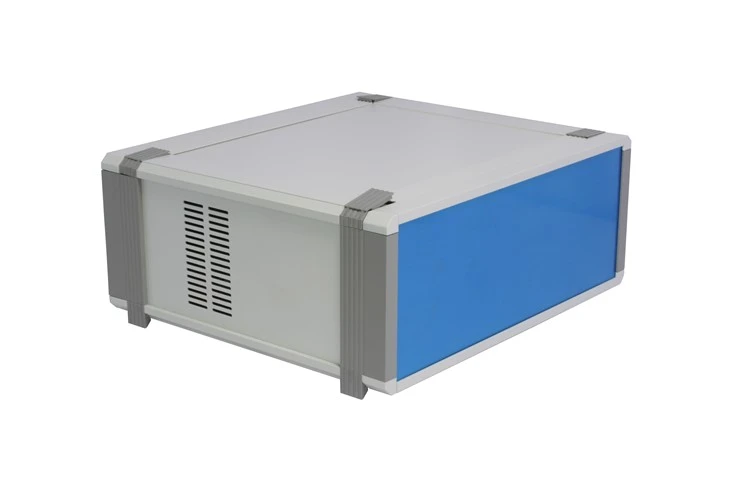
As a metal enclosure box supplier, we offer a wide range of products with excellent anti - static performance. Our Electronic Sheet Metal Case Aluminum Control Box is made of high - quality aluminum, which provides good electrical conductivity and shielding effect. The smooth surface finish of the box ensures efficient charge dissipation, and it can be easily grounded to further enhance its anti - static properties.
Our Aluminum Plastic Electrical Chassis Box combines the advantages of aluminum and plastic. The aluminum part provides the anti - static and shielding functions, while the plastic part can offer additional insulation and protection. This hybrid design makes it suitable for a variety of applications where both anti - static protection and other features are required.
In addition, our Aluminum Profiles Communication Industry Electronic Medical Equipment Testing Chassis Enclosure is specifically designed for the communication and medical industries. The aluminum profiles provide a strong and stable structure, and the high - quality aluminum material ensures excellent anti - static performance. The enclosure is also designed with proper grounding points to ensure that static charges can be safely dissipated.
Importance of Anti - Static Enclosures in Different Industries
Electronics Manufacturing
In the electronics manufacturing industry, anti - static metal enclosure boxes are essential for protecting electronic components during the manufacturing process. Electronic components are extremely sensitive to static electricity, and even a small ESD event can cause significant damage. Metal enclosure boxes can shield the components from external static fields and provide a safe environment for handling and assembling the components.
Telecommunications
In the telecommunications industry, reliable communication equipment is crucial for maintaining seamless communication. Anti - static metal enclosure boxes can protect the sensitive electronic circuits in communication devices from static interference, ensuring stable and reliable operation. They also help to prevent data loss and signal degradation caused by static electricity.
Medical Equipment
Medical equipment often contains highly sensitive electronic components that are used for diagnosis and treatment. Static electricity can interfere with the accuracy of these equipment and even pose a risk to patient safety. Metal enclosure boxes with good anti - static performance can protect the medical equipment from static damage and ensure its proper functioning.
Contact for Purchase and Consultation
If you are in need of high - quality metal enclosure boxes with excellent anti - static performance, we are here to help. Our team of experts can provide you with detailed information about our products and help you choose the most suitable enclosure box for your specific application. Whether you are in the electronics manufacturing, telecommunications, or medical industry, we have the right solution for you.
We understand the importance of anti - static protection for your electronic equipment, and we are committed to providing you with reliable and cost - effective metal enclosure box solutions. Contact us today to start the procurement discussion and ensure the safety and performance of your electronic devices.
References
- "Electrostatic Discharge Handbook for Electronic Devices and Components", ESD Association.
- "Metal Materials and Their Properties", ASM International.
- "Shielding Theory and Practice", IEEE Press.


