


Residual stress in sheet metal parts after processing is a critical issue that can significantly affect the performance and durability of these components. As a sheet metal parts supplier, I have encountered various challenges related to residual stress and have developed effective strategies to control it. In this blog post, I will share some insights on how to manage residual stress in sheet metal parts, ensuring high - quality products for our customers.
Understanding Residual Stress in Sheet Metal Parts
Residual stress refers to the internal stress that remains within a material after the external forces that caused its deformation have been removed. In the context of sheet metal processing, residual stress can be generated during several manufacturing operations such as cutting, bending, welding, and stamping.
Cutting processes, like laser cutting or shearing, can introduce thermal and mechanical stresses. Laser cutting, for example, creates a high - temperature zone around the cut edge, which leads to rapid heating and cooling. This thermal cycle causes uneven expansion and contraction of the metal, resulting in residual stress. Shearing, on the other hand, applies a large mechanical force to separate the metal, which can also distort the crystal structure of the sheet metal and induce stress.
Bending operations are another major source of residual stress. When a sheet metal is bent, the outer surface of the bend is stretched while the inner surface is compressed. If the bending process is not carefully controlled, these plastic deformations can leave behind significant residual stress. Welding, which involves melting and re - solidifying the metal, creates thermal gradients that cause expansion and contraction. As the welded area cools, it contracts at a different rate compared to the surrounding metal, leading to the formation of residual stress.
The Negative Impacts of Residual Stress
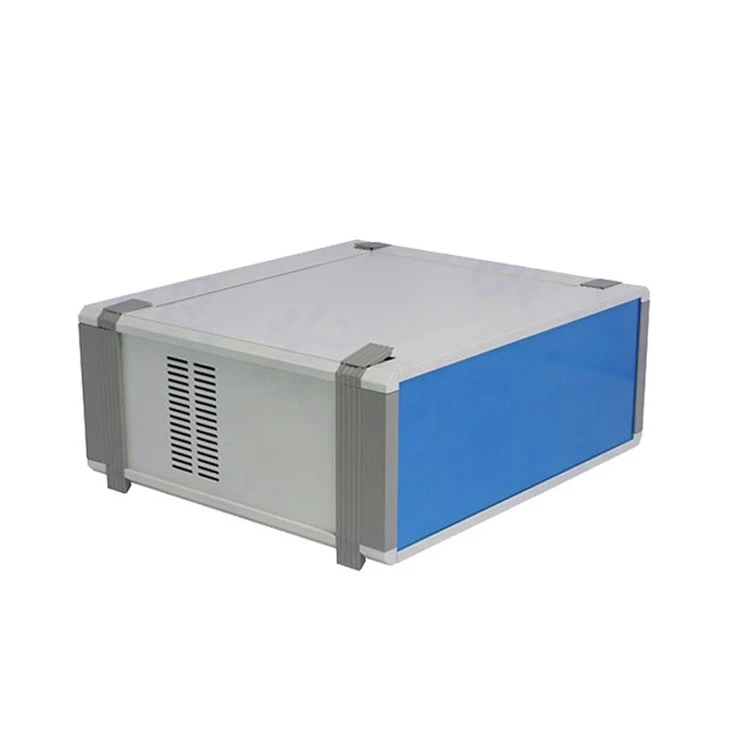
Uncontrolled residual stress in sheet metal parts can have several detrimental effects. Firstly, it can cause dimensional instability. Over time, the internal stress may cause the part to deform, deviating from its intended shape and size. This is particularly problematic in applications where precise dimensions are crucial, such as in the manufacturing of Electronic Desktop Metal Case Plastic Frame.
Secondly, residual stress can reduce the fatigue life of the sheet metal parts. The stress concentration points created by the residual stress can act as initiation sites for cracks. When the part is subjected to cyclic loading during its service life, these cracks can propagate more easily, leading to premature failure.
Moreover, residual stress can also affect the corrosion resistance of the sheet metal. The internal stress can distort the surface structure of the metal, making it more susceptible to corrosion. This is a serious concern in applications where the parts are exposed to harsh environmental conditions, such as in outdoor enclosures like the Newest Aluminum Chassis Box In China.
Strategies for Controlling Residual Stress
1. Optimizing the Manufacturing Process
One of the most effective ways to control residual stress is to optimize the manufacturing process itself. For cutting operations, using appropriate cutting parameters can minimize the generation of residual stress. For example, in laser cutting, adjusting the laser power, cutting speed, and gas pressure can help to reduce the thermal impact on the sheet metal. A lower laser power and a higher cutting speed can result in a narrower heat - affected zone, thereby reducing the thermal stress.
In bending operations, using proper tooling and bending techniques is crucial. The radius of the bend should be carefully selected according to the thickness and material properties of the sheet metal. A too - small bend radius can cause excessive deformation and high residual stress. Additionally, applying a pre - stress relief process before bending can also help to reduce the overall residual stress.
For welding, choosing the right welding method and parameters is essential. For instance, using a low - heat - input welding process can minimize the thermal gradients and the associated residual stress. Pulse welding, for example, can provide better control over the heat input compared to continuous welding.
2. Heat Treatment
Heat treatment is a well - established method for relieving residual stress in sheet metal parts. Annealing is a common heat - treatment process used to reduce residual stress. In annealing, the sheet metal is heated to a specific temperature and then slowly cooled. This process allows the metal atoms to rearrange themselves, relieving the internal stress.
The annealing temperature and time depend on the type of metal and the magnitude of the residual stress. For aluminum sheet metal, annealing temperatures typically range from 260°C to 370°C, while for steel, the annealing temperature can be much higher, around 600°C to 700°C.
Another heat - treatment method is stress - relieving tempering. This process involves heating the sheet metal to a lower temperature than annealing and then holding it at that temperature for a certain period. Stress - relieving tempering can effectively reduce the residual stress without significantly altering the mechanical properties of the metal.
3. Mechanical Methods
Mechanical methods can also be used to control residual stress. Shot peening is a popular mechanical process where small spherical particles are shot at high velocity onto the surface of the sheet metal. The impact of the particles creates plastic deformation on the surface, which induces compressive residual stress. Compressive stress can counteract the tensile residual stress, reducing the overall stress level in the part.
Rolling is another mechanical method that can be used to relieve residual stress. By passing the sheet metal through a pair of rolls, the metal is compressed and stretched in a controlled manner. This process can help to redistribute the residual stress and make it more uniform throughout the part.
Quality Control and Monitoring
To ensure the effectiveness of the residual - stress control measures, quality control and monitoring are essential. Non - destructive testing methods can be used to detect and measure the residual stress in sheet metal parts. X - ray diffraction is a widely used technique for measuring the residual stress at the surface of the metal. It works by analyzing the diffraction pattern of X - rays scattered by the crystal lattice of the metal.
Ultrasonic testing can also be used to detect internal defects and residual stress in sheet metal parts. By measuring the velocity of ultrasonic waves traveling through the metal, changes in the material's internal structure due to residual stress can be detected.

Regular inspection and testing during the manufacturing process can help to identify any issues related to residual stress early on. This allows for timely adjustments to the manufacturing process or the application of additional stress - relief measures.
Conclusion
Controlling residual stress in sheet metal parts is a complex but essential task for a sheet metal parts supplier. By understanding the sources and impacts of residual stress, and implementing appropriate control strategies such as optimizing the manufacturing process, heat treatment, and mechanical methods, we can produce high - quality sheet metal parts with minimal residual stress.
At our company, we are committed to providing our customers with top - notch sheet metal parts that meet their strict quality requirements. Whether you need Electronic Desktop Metal Case Plastic Frame, Newest Aluminum Chassis Box In China, or Aluminum Enclosure Sheet Metal Rack Mount case, we have the expertise and technology to ensure that our products are free from excessive residual stress.
If you are interested in our sheet metal parts or have any questions about residual stress control, please feel free to contact us for a purchase negotiation. We look forward to working with you to meet your sheet metal needs.
References
- ASM Handbook, Volume 4: Heat Treating. ASM International.
- Kalpakjian, S., & Schmid, S. R. (2008). Manufacturing Engineering and Technology. Pearson Prentice Hall.
- Dieter, G. E. (1986). Mechanical Metallurgy. McGraw - Hill.


