


Hey there! As a supplier of metal enclosures with an IP65 rating, I often get asked about ventilation options for these enclosures. IP65-rated metal enclosures are designed to be dust-tight and protected against water jets, which is great for keeping the internal components safe from the elements. But when it comes to ventilation, things can get a bit tricky.
Let's first understand why ventilation is important in the first place. When electronic components are housed inside a metal enclosure, they generate heat during operation. If this heat isn't dissipated properly, it can lead to overheating, which can reduce the lifespan of the components and even cause them to fail. So, having a good ventilation system is crucial for maintaining the optimal performance of the electronics inside the enclosure.
Now, let's dive into the ventilation options available for IP65 metal enclosures.
Passive Ventilation
Passive ventilation is the simplest and most cost - effective option. It relies on natural convection to move air in and out of the enclosure. The basic principle behind natural convection is that hot air rises, and cooler air sinks. So, by placing vents at the top and bottom of the enclosure, we can create a natural airflow.
For an IP65 enclosure, we need to make sure that the vents are designed in such a way that they still maintain the dust - tight and water - jet protection. One way to do this is by using special vent covers. These covers are designed with a labyrinth - like structure that allows air to pass through but prevents dust and water from entering.
The advantage of passive ventilation is that it doesn't require any additional power source. It's a low - maintenance option that can work well in many applications where the heat generation is relatively low. However, it has its limitations. In high - heat applications, passive ventilation may not be sufficient to keep the temperature inside the enclosure at an acceptable level.
Active Ventilation
When passive ventilation isn't enough, active ventilation comes into play. Active ventilation uses fans to force air in and out of the enclosure. There are two main types of fans that can be used: exhaust fans and intake fans.
Exhaust fans are placed at the top of the enclosure. They draw the hot air out of the enclosure, creating a negative pressure inside. This negative pressure then causes the cooler air to be drawn in through the intake vents at the bottom of the enclosure. Intake fans, on the other hand, are placed at the bottom. They blow fresh air into the enclosure, creating a positive pressure that forces the hot air out through the exhaust vents at the top.
When using fans in an IP65 enclosure, we need to make sure that the fans are also rated for IP65. There are special IP65 - rated fans available in the market that are designed to be dust - tight and protected against water jets. These fans are usually sealed and have gaskets to prevent dust and water from entering.
The advantage of active ventilation is that it can provide a much higher airflow rate compared to passive ventilation. This makes it suitable for applications where the heat generation is high, such as in power electronics or industrial control systems. However, active ventilation requires a power source, and the fans need to be maintained regularly to ensure proper operation.
Heat Exchangers
Another option for ventilation in an IP65 metal enclosure is to use a heat exchanger. A heat exchanger is a device that transfers heat from one fluid (usually air inside the enclosure) to another fluid (usually air outside the enclosure) without mixing the two fluids.
There are different types of heat exchangers available, such as air - to - air heat exchangers and air - to - water heat exchangers. Air - to - air heat exchangers are the most common type for metal enclosures. They work by having two separate air channels: one for the hot air inside the enclosure and one for the cooler air outside the enclosure. The heat is transferred from the hot air to the cooler air through a series of fins or plates.
The advantage of using a heat exchanger is that it can provide effective heat transfer without the need for direct air exchange between the inside and outside of the enclosure. This means that the IP65 protection of the enclosure can be maintained. However, heat exchangers can be more expensive than fans, and they also require some space inside the enclosure.
Selecting the Right Ventilation Option
When selecting the right ventilation option for an IP65 metal enclosure, there are several factors to consider.
First, we need to consider the heat generation of the components inside the enclosure. If the heat generation is low, passive ventilation may be sufficient. But if the heat generation is high, we may need to use active ventilation or a heat exchanger.
Second, we need to consider the environment in which the enclosure will be used. If the environment is very dusty or wet, we need to make sure that the ventilation option we choose can still maintain the IP65 protection.
Third, we need to consider the cost and space requirements. Passive ventilation is the most cost - effective option, but it may not be suitable for all applications. Active ventilation and heat exchangers can provide better performance, but they are more expensive and may require more space.
As a supplier of metal enclosures with an IP65 rating, we offer a variety of products that can be used in different ventilation scenarios. For example, our Sheet Metal Chassis Box Aluminum Case is a great option for those looking for a durable and well - designed enclosure. It can be easily modified to include vents for passive or active ventilation.
Our Aluminum Enclosure Control Case Power Supply is another product that can be used in applications where heat management is crucial. It can be equipped with fans or a heat exchanger to ensure proper ventilation.

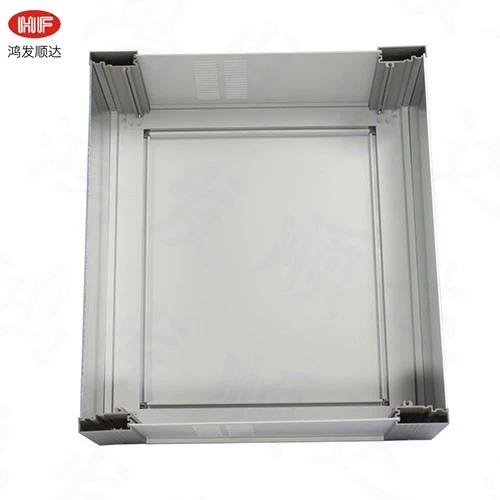
And for those who need a more specialized solution, our Aluminum Plastic Electrical Chassis Box offers a unique combination of materials that can provide both protection and ventilation options.
If you're in the market for an IP65 metal enclosure and need help with ventilation options, don't hesitate to reach out. We're here to assist you in finding the best solution for your specific needs. Whether you're working on a small - scale project or a large - scale industrial application, we have the expertise and products to meet your requirements. Let's start a conversation and see how we can work together to solve your ventilation challenges!
References
- ASHRAE Handbook - HVAC Systems and Equipment. American Society of Heating, Refrigerating and Air - Conditioning Engineers.
- "Thermal Management of Electronic Systems" by Randall L. Moffitt.


