


Hey there! As a supplier of 4U server chassis, I've had my fair share of conversations about their expansion capabilities. So, I thought it'd be cool to break it down for you in this blog post.
First off, let's get on the same page about what a 4U server chassis is. A 4U server chassis is a type of server enclosure that's 4 rack units high. In simple terms, it's a box that holds all the components of a server. Rack units are a standard measurement in the server world, with 1U being 1.75 inches. So, a 4U chassis is about 7 inches tall.
Now, let's dive into the expansion capabilities. One of the main things people look at when it comes to expansion is storage. A 4U server chassis usually has plenty of room for hard drives or solid - state drives (SSDs). Most 4U chassis can accommodate anywhere from 8 to 24 drive bays. That's a whole lot of space to store data! Whether you're running a small business or a large - scale data center, having this kind of storage expansion is crucial. You can start with a few drives and add more as your data needs grow.
For example, if you're using the server for a media streaming service, you'll need to store a ton of video files. With a 4U chassis, you can keep expanding your storage capacity over time. And if you're into data analytics, you can store large datasets for processing. The ability to expand storage easily means you don't have to worry about running out of space too quickly.
Another important aspect of expansion is the ability to add more network cards. In today's connected world, having multiple network connections is essential. A 4U server chassis often has multiple PCIe slots. These slots allow you to insert additional network interface cards (NICs). You can use these NICs to connect to different networks, set up redundant connections for high availability, or increase your network bandwidth.
Let's say you're running a web - hosting service. You might want to connect your server to multiple Internet Service Providers (ISPs) for better reliability. Or, if you're dealing with a high - volume of network traffic, adding more NICs can help distribute the load and keep your servers running smoothly.
When it comes to power expansion, 4U server chassis usually have room for multiple power supplies. This is great for redundancy. If one power supply fails, the other can keep the server running. Most 4U chassis support at least two power supplies, and some can even handle up to four. This means you can have a reliable power source for your server, even in case of a power supply failure.
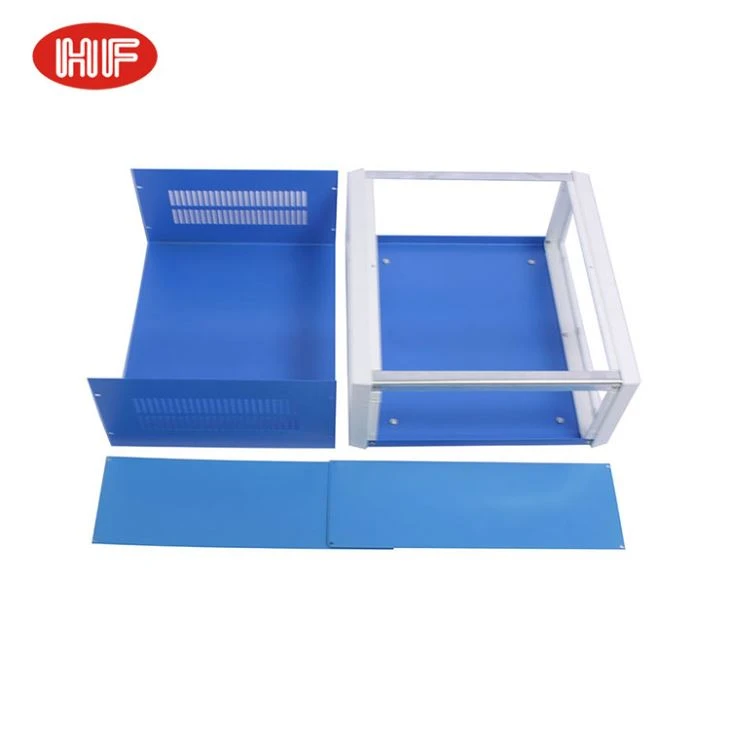
Now, let's talk about the types of materials used in 4U server chassis and how they can affect expansion. You can find chassis made from different materials like sheet metal, aluminum, and stainless steel. Sheet metal enclosure aluminum Special shape iron stainless steel case are quite popular. They're strong, durable, and can protect your server components from physical damage and electromagnetic interference.
Aluminum chassis, on the other hand, are lightweight and have good heat - dissipating properties. Newest Aluminum Chassis Box In China are often designed with modern features that make them suitable for expansion. They can have well - thought - out internal layouts that allow for easy installation of new components.
Die - cast aluminum extrusion enclosures are also an option. Diecast Aluminum Extrusion Enclosures Box offer a high level of protection and can be customized to fit specific expansion needs. They're great for servers that need to operate in harsh environments.
In terms of cooling expansion, 4U server chassis are designed to handle the heat generated by multiple components. They usually come with multiple fans, and in some cases, you can add more. Proper cooling is essential for the longevity and performance of your server. As you add more components like hard drives, network cards, and additional processors, the heat output increases. Having the ability to expand your cooling system ensures that your server stays at a safe operating temperature.
Some 4U chassis also support liquid - cooling solutions. Liquid cooling can be more efficient than air cooling, especially for high - performance servers. If you're planning to overclock your server or run resource - intensive applications, liquid cooling might be a great expansion option.
The expansion capabilities of a 4U server chassis also extend to the ability to add more memory. Most 4U chassis support multiple memory slots. You can start with a small amount of RAM and add more as your server's workload increases. Whether you're running a database server or a virtualization platform, having enough memory is crucial for smooth operation.
If you're in the market for a 4U server chassis, it's important to consider your future expansion needs. Don't just think about what you need right now, but also what you might need in the next few years. A good 4U chassis should give you the flexibility to grow and adapt as your business or project evolves.
So, if you're interested in exploring the expansion capabilities of our 4U server chassis further or are looking to make a purchase, I'd love to talk to you. Reach out to us to start a conversation about your specific requirements. We can help you find the perfect 4U server chassis that meets your expansion needs and fits your budget.

References
- Server Hardware Basics: Understanding Rack Units and Chassis Design
- Data Center Expansion Best Practices


