


NEMA (National Electrical Manufacturers Association) enclosures play a pivotal role in safeguarding electrical components across diverse environments. These enclosures are designed to meet specific standards, providing protection against various external factors such as dust, water, and mechanical damage. However, one crucial aspect that often gets overlooked is their impact on the heat dissipation of electrical components. In this blog, as a supplier of NEMA enclosures, I will delve into how NEMA enclosures influence the heat dissipation of electrical components and why it is of utmost importance to consider this factor in your electrical system design.
Understanding Heat Generation in Electrical Components
Before we explore the impact of NEMA enclosures on heat dissipation, it's essential to understand how heat is generated in electrical components. Electrical components such as resistors, transistors, and power supplies dissipate power in the form of heat during their normal operation. This heat generation is a natural by - product of the electrical resistance within the components. If this heat is not properly dissipated, it can lead to a significant increase in the temperature of the components, which may result in reduced performance, shortened lifespan, and even component failure.
The power dissipated as heat (P) can be calculated using the formula (P = I^{2}R), where (I) is the current flowing through the component and (R) is the resistance of the component. As the current or resistance increases, the amount of heat generated also increases.

The Role of NEMA Enclosures in Heat Dissipation
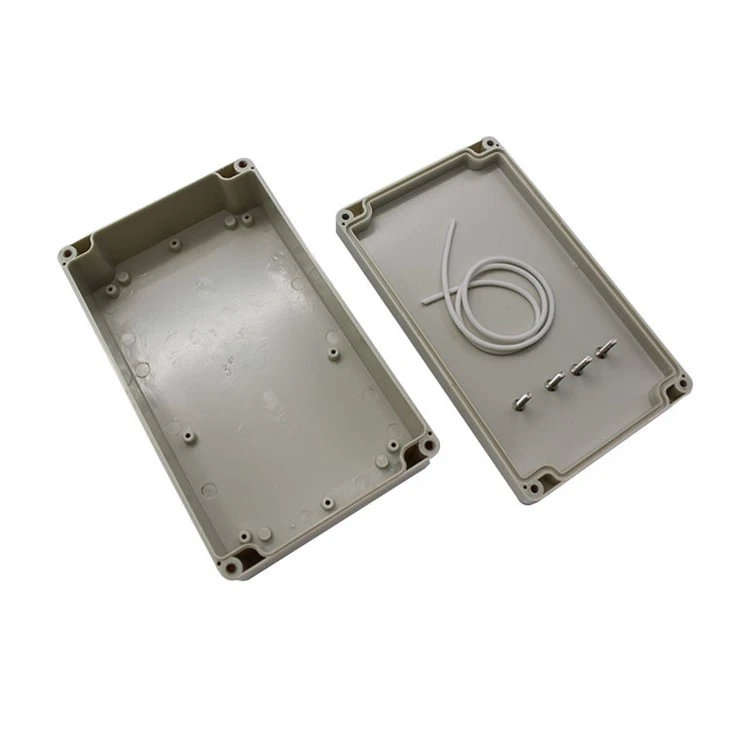
NEMA enclosures are designed to provide a protective barrier for electrical components. However, this protective feature can also act as a hindrance to heat dissipation. The enclosure can trap the heat generated by the electrical components inside, leading to a rise in the internal temperature. The degree to which an enclosure affects heat dissipation depends on several factors, including the type of NEMA enclosure, its material, and its design.
Types of NEMA Enclosures and Their Impact
NEMA enclosures come in various types, each designed for specific environmental conditions. For example, NEMA 1 enclosures are designed for general - purpose indoor use, providing protection against incidental contact with the enclosed equipment. These enclosures typically have a relatively simple design and may not have significant insulation properties, allowing for some natural heat dissipation.
On the other hand, NEMA 4 and NEMA 4X enclosures are designed for outdoor use and provide protection against water, dust, and corrosion. These enclosures are more sealed and have better protection against external elements, but this also means that they can impede heat dissipation more effectively. The sealed design prevents the free flow of air in and out of the enclosure, which is essential for convective heat transfer.
Material of the Enclosure
The material of the NEMA enclosure also plays a crucial role in heat dissipation. Enclosures made of metals such as aluminum or steel are generally better conductors of heat compared to plastic enclosures. Metals can absorb and transfer heat more efficiently, allowing for better heat dissipation through conduction. For instance, aluminum has a high thermal conductivity, which means it can quickly transfer the heat from the internal components to the outer surface of the enclosure, where it can be dissipated into the surrounding environment.
Plastic enclosures, while offering good insulation and corrosion resistance, have lower thermal conductivity. This can lead to a build - up of heat inside the enclosure, especially if the electrical components generate a significant amount of heat.
Design of the Enclosure
The design of the NEMA enclosure can either enhance or impede heat dissipation. Enclosures with proper ventilation holes or fins can significantly improve heat dissipation. Ventilation holes allow for the exchange of air inside and outside the enclosure, facilitating convective heat transfer. Fins, on the other hand, increase the surface area of the enclosure, which enhances the rate of heat transfer through radiation and convection.
For example, some NEMA enclosures are designed with a forced - air cooling system. These systems use fans to circulate air inside the enclosure, ensuring that the hot air is continuously removed and replaced with cooler air from the outside. This can be particularly useful in enclosures where the electrical components generate a large amount of heat.
Impact of Poor Heat Dissipation
When heat dissipation is poor in a NEMA enclosure, it can have several negative consequences for the electrical components.
Reduced Performance
As the temperature of electrical components increases, their performance can degrade. For example, semiconductor devices such as transistors and integrated circuits are highly sensitive to temperature. An increase in temperature can cause changes in the electrical properties of these devices, leading to reduced speed, increased noise, and inaccurate signal processing.
Shortened Lifespan
High temperatures can also significantly shorten the lifespan of electrical components. Most electronic components have a maximum operating temperature specified by the manufacturer. Exceeding this temperature can cause accelerated aging of the components, leading to premature failure. For example, electrolytic capacitors can dry out at high temperatures, reducing their capacitance and increasing their equivalent series resistance.
Component Failure
In extreme cases, poor heat dissipation can lead to component failure. When the temperature of a component rises to a critical level, it can cause permanent damage to the component, such as melting of the solder joints or breakdown of the semiconductor material. This can result in a complete loss of functionality of the electrical system.
Strategies for Improving Heat Dissipation in NEMA Enclosures
As a supplier of NEMA enclosures, we understand the importance of ensuring proper heat dissipation. Here are some strategies that can be employed to improve heat dissipation in NEMA enclosures:
Selecting the Right Enclosure
Choosing the appropriate NEMA enclosure for your application is crucial. Consider the environmental conditions, the amount of heat generated by the electrical components, and the available space. If the components generate a large amount of heat, a more ventilated enclosure or one with a forced - air cooling system may be required.
Using Heat - Conductive Materials
As mentioned earlier, the material of the enclosure can affect heat dissipation. Consider using enclosures made of materials with high thermal conductivity, such as aluminum. Additionally, thermal interface materials can be used between the electrical components and the enclosure to improve heat transfer.
Designing for Ventilation
Proper ventilation is essential for heat dissipation. Incorporate ventilation holes or slots in the design of the enclosure to allow for the free flow of air. The size, location, and number of ventilation holes should be carefully considered to ensure optimal air circulation. For example, placing ventilation holes at the top and bottom of the enclosure can create a natural convection current, where hot air rises and exits through the top holes, and cooler air enters through the bottom holes.
Our NEMA Enclosure Products
We offer a wide range of NEMA enclosures that are designed to meet different heat dissipation requirements. For example, our Small Size Locking Screw General Waterproof Box is suitable for small - scale electrical applications where some protection against water and dust is required. It has a simple design that allows for some natural heat dissipation.
Our Switch Power Supply Cable Connector Junction Box is designed for outdoor use and provides protection against water, dust, and corrosion. It can be customized with ventilation options to improve heat dissipation.
The Plasitc ABS Electrical Junction Box is made of plastic ABS, which offers good insulation and corrosion resistance. Although plastic has lower thermal conductivity, we can design this enclosure with fins or ventilation holes to enhance heat dissipation.
Contact Us for Procurement
If you are in need of NEMA enclosures for your electrical applications, we are here to assist you. Our team of experts can help you select the right enclosure based on your specific heat dissipation requirements and other application needs. Whether you are a small - scale electrical contractor or a large - scale industrial manufacturer, we have the products and expertise to meet your needs. Please feel free to contact us for procurement and further discussions.
References
- ASHRAE Handbook - Fundamentals. American Society of Heating, Refrigerating and Air - Conditioning Engineers.
- Electronics Cooling Handbook. Edited by R.K. Shah and D.P. Sekulic.
- NEMA Standards Publication 250 - 2014. Enclosures for Electrical Equipment (1000 Volts Maximum).


