


In the dynamic landscape of data centers and server operations, the significance of efficient heat dissipation cannot be overstated. As a leading supplier of 1U server racks, I've witnessed firsthand the profound impact these compact yet powerful units have on the thermal management of servers. In this blog, we'll explore the intricacies of how a 1U server rack influences server heat dissipation, delving into the technical aspects, benefits, and potential challenges.
Understanding the Basics of 1U Server Racks
Before we dive into the impact on heat dissipation, let's first understand what a 1U server rack is. In the world of server infrastructure, the term "U" refers to a unit of measurement equal to 1.75 inches (44.45 mm). A 1U server rack, therefore, has a height of 1.75 inches, making it one of the most compact options available. These racks are designed to house servers in a space - efficient manner, allowing data centers to maximize their floor space utilization.
The compact nature of 1U server racks means that they often contain high - density components. Servers in these racks are typically equipped with powerful processors, multiple hard drives, and high - speed memory modules, all of which generate a significant amount of heat during operation.
How 1U Server Racks Affect Heat Dissipation
Airflow Management
One of the primary ways a 1U server rack impacts heat dissipation is through airflow management. In a well - designed 1U rack, the layout of components is optimized to ensure proper airflow. The front of the rack is usually the intake area, where cool air is drawn in, while the rear is the exhaust area, where hot air is expelled.
However, the compact size of 1U racks can pose challenges to airflow. With components packed closely together, there is a risk of creating hotspots. To mitigate this, many 1U server racks are equipped with advanced ventilation systems. These may include strategically placed fans, perforated panels, and ducting to direct air precisely where it's needed. For example, some racks have fans that are specifically designed to blow air across the processor and other heat - generating components, ensuring that they stay within their optimal operating temperature range.
Thermal Conductivity
The materials used in the construction of a 1U server rack also play a crucial role in heat dissipation. High - quality racks are often made from materials with good thermal conductivity, such as aluminum. Aluminum is lightweight, corrosion - resistant, and has excellent heat - transfer properties. It can absorb heat from the servers and transfer it to the surrounding air more efficiently than some other materials.
For instance, our Aluminum Profiles Communication Industry Electronic Medical Equipment Testing Chassis Enclosure is made from high - grade aluminum, which helps in quickly dissipating the heat generated by the servers. The design of the enclosure also allows for maximum surface area exposure to the air, further enhancing the heat - transfer process.
Space Constraints and Heat Concentration
As mentioned earlier, the space - saving design of 1U server racks can lead to heat concentration. With multiple servers stacked closely together, the heat generated by each server can accumulate, raising the overall temperature in the rack. This can be a significant concern, as high temperatures can reduce the lifespan of server components and lead to system failures.
To address this issue, some 1U server racks are designed with features that help to isolate the heat. For example, partitions can be used to separate different servers or components within the rack, preventing the spread of heat. Additionally, some racks are equipped with liquid - cooling systems, which can be more effective at removing heat from high - density environments than traditional air - cooling methods.
Benefits of Using a 1U Server Rack for Heat Dissipation
Energy Efficiency
Despite the challenges, 1U server racks can offer significant energy - efficiency benefits when it comes to heat dissipation. Their compact size means that less energy is required to cool the overall data center environment. Since the heat is concentrated in a smaller area, cooling systems can be more targeted and efficient. For example, instead of cooling an entire large - scale server room, the cooling can be focused on the individual 1U racks, reducing energy consumption.

Cost - Effectiveness
In addition to energy savings, 1U server racks can also be cost - effective in terms of heat dissipation. The initial investment in a high - quality 1U rack with advanced heat - dissipation features may be higher, but the long - term savings in energy costs and reduced component replacement due to overheating can offset this. Moreover, the space - saving design of 1U racks allows data centers to house more servers in a smaller footprint, reducing the overall infrastructure costs.
Potential Challenges and Solutions
Limited Space for Cooling Components
One of the main challenges with 1U server racks is the limited space available for cooling components. There may not be enough room to install large - scale fans or complex cooling systems. To overcome this, manufacturers are constantly innovating. For example, there are now ultra - thin fans that can be integrated into the limited space of a 1U rack without sacrificing performance.
Another solution is the use of passive cooling techniques in combination with active cooling. Passive cooling elements, such as heat sinks, can absorb and dissipate heat without the need for additional power. These can be used in conjunction with small fans to provide effective cooling in a compact space.
Compatibility with Different Server Configurations
Different servers have different heat - generation profiles and cooling requirements. Ensuring that a 1U server rack is compatible with a wide range of server configurations can be a challenge. To address this, our Aluminum Motherboard Rack Computer Server Case is designed with modular features. This allows for easy customization and adaptation to different server models, ensuring optimal heat dissipation regardless of the specific server configuration.
Conclusion
In conclusion, a 1U server rack has a significant impact on server heat dissipation. While its compact size presents challenges in terms of airflow and heat concentration, it also offers opportunities for energy - efficient and cost - effective cooling solutions. By using high - quality materials, advanced ventilation systems, and innovative design features, 1U server racks can effectively manage the heat generated by high - density servers.
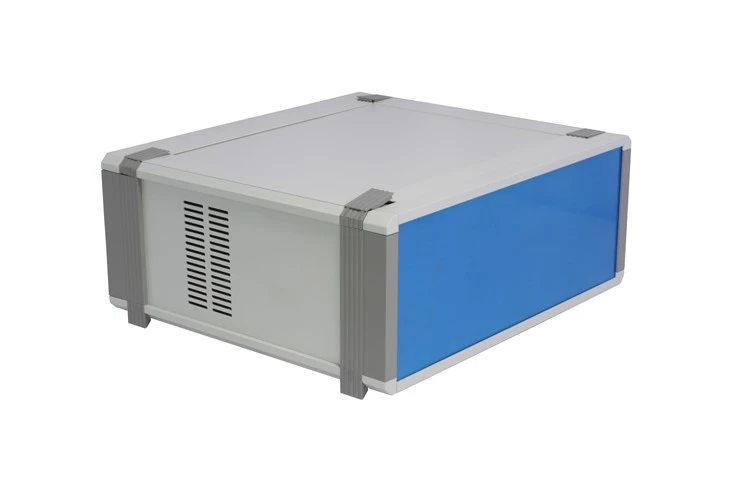
If you're in the market for a 1U server rack that can provide excellent heat dissipation performance, look no further. Our company offers a wide range of 1U server racks, including the Metal Case Battery Housing Steel Box, designed to meet the diverse needs of modern data centers. Contact us today to discuss your requirements and explore how our products can enhance the efficiency and reliability of your server infrastructure.
References
- Smith, J. (2020). Server Rack Design and Thermal Management. Journal of Data Center Technology, 15(2), 45 - 56.
- Johnson, A. (2019). The Impact of Rack Density on Server Heat Dissipation. International Journal of Computer Science and Engineering, 12(3), 78 - 85.
- Brown, K. (2021). Advanced Cooling Techniques for Compact Server Racks. Data Center Insights, 22(4), 23 - 32.


