


As a supplier of 3U rack boxes, I understand the critical importance of effective cooling methods for these enclosures. In this blog post, I will delve into the various cooling techniques available for 3U rack boxes, exploring their advantages, disadvantages, and applications. By the end of this article, you will have a comprehensive understanding of how to keep your 3U rack box and its components operating at optimal temperatures.
Why Cooling is Essential for 3U Rack Boxes
3U rack boxes are commonly used to house electronic components such as servers, switches, and power supplies. These components generate heat during operation, and if not properly managed, this heat can lead to a range of issues, including reduced performance, component failure, and shortened lifespan. Effective cooling is essential to maintain the reliability and longevity of the equipment housed within the 3U rack box.
Natural Convection Cooling
Natural convection cooling is the simplest and most cost - effective cooling method for 3U rack boxes. It relies on the natural movement of air due to differences in temperature. As the air inside the rack box heats up, it rises, creating a flow of cooler air from the bottom or sides of the enclosure.
Advantages:
- Low cost: There are no additional components such as fans or heat exchangers required, which significantly reduces the cost.
- Quiet operation: Since there are no moving parts, natural convection cooling is completely silent, making it ideal for environments where noise is a concern.
Disadvantages:
- Limited cooling capacity: Natural convection cooling is only effective for low - power applications. As the power consumption of the components increases, the heat generated may exceed the cooling capacity of natural convection.
- Dependence on environmental conditions: The efficiency of natural convection cooling is highly dependent on the ambient temperature and airflow in the surrounding environment.
Applications:
Natural convection cooling is suitable for 3U rack boxes housing low - power components, such as small network switches or media players, where the heat generation is relatively low.
Forced Air Cooling
Forced air cooling uses fans to actively move air through the 3U rack box, increasing the rate of heat transfer. Fans can be installed at the front, rear, or sides of the enclosure to create a flow of air that removes heat from the components.
Advantages:

- High cooling capacity: Forced air cooling can effectively dissipate a large amount of heat, making it suitable for high - power applications.
- Flexibility: Fans can be easily adjusted or replaced to meet the specific cooling requirements of different components.
Disadvantages:
- Noise: Fans generate noise during operation, which can be a problem in noise - sensitive environments.
- Power consumption: Fans consume electrical power, which adds to the overall energy consumption of the system.
- Maintenance: Fans have moving parts that can wear out over time, requiring regular maintenance and replacement.
Applications:
Forced air cooling is widely used in 3U rack boxes housing high - power servers, data storage devices, and other components that generate a significant amount of heat.
Liquid Cooling
Liquid cooling is a more advanced cooling method that uses a liquid coolant, such as water or a refrigerant, to transfer heat away from the components. The coolant absorbs heat from the components and then transfers it to a heat exchanger, where it is dissipated into the surrounding environment.
Advantages:
- Highly efficient: Liquid cooling can achieve much higher cooling capacities than air cooling, making it suitable for extremely high - power applications.
- Reduced noise: Since the coolant is circulated by a pump, which is generally quieter than fans, liquid cooling systems can operate with less noise.
Disadvantages:
- High cost: Liquid cooling systems are more complex and expensive to install and maintain compared to air cooling systems.
- Risk of leakage: There is a risk of coolant leakage, which can damage the components inside the rack box.
Applications:
Liquid cooling is commonly used in 3U rack boxes for high - performance computing, data centers, and other applications where the heat density is extremely high.
Heat Pipe Cooling
Heat pipe cooling is a passive cooling method that uses heat pipes to transfer heat from the components to a heat sink or radiator. Heat pipes are sealed tubes filled with a working fluid that evaporates at the hot end of the pipe and condenses at the cold end, transferring heat in the process.
Advantages:
- High heat transfer efficiency: Heat pipes can transfer heat much more efficiently than traditional metal conductors, allowing for effective cooling of high - power components.
- Compact design: Heat pipes are relatively small and lightweight, making them suitable for use in compact 3U rack boxes.
Disadvantages:
- Limited heat transfer distance: Heat pipes have a limited distance over which they can effectively transfer heat, which may restrict their use in larger enclosures.
- Cost: Heat pipes are more expensive than traditional cooling methods, which can increase the overall cost of the rack box.
Applications:
Heat pipe cooling is often used in 3U rack boxes for applications such as high - end graphics cards, processors, and other components that require efficient cooling in a limited space.
Choosing the Right Cooling Method for Your 3U Rack Box
When choosing a cooling method for your 3U rack box, several factors need to be considered:
- Power consumption of components: High - power components require more effective cooling methods, such as forced air or liquid cooling.
- Noise requirements: If noise is a concern, natural convection or heat pipe cooling may be more suitable.
- Cost: Your budget will also play a role in determining the most appropriate cooling method.
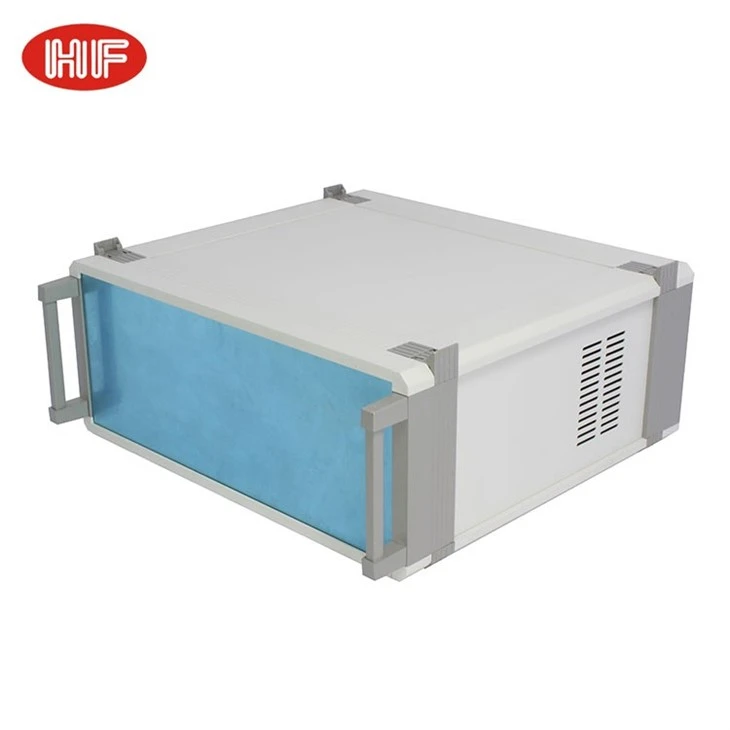
At our company, we offer a range of 3U rack boxes with different cooling options to meet the diverse needs of our customers. For example, our Aluminum Enclosure Sheet Metal Rack Mount case can be customized with forced air cooling fans for high - power applications, while our Aluminum Chassis Box Metal Junction Case is suitable for low - power applications with natural convection cooling. We also have the Aluminum Sheet Metal Enclosure Hongfa Case, which can be equipped with heat pipe cooling for efficient heat dissipation in a compact space.
If you are in the market for a 3U rack box and need assistance in choosing the right cooling method for your specific application, please feel free to contact us. Our team of experts is ready to provide you with professional advice and solutions tailored to your needs.
References
- ASHRAE (American Society of Heating, Refrigerating and Air - Conditioning Engineers). Thermal Guidelines for Data Processing Environments.
- Electronics Cooling Handbook, McGraw - Hill Professional.


