


Hey there! As a supplier of 1U server racks, I've been in the game for quite a while, and I'm stoked to share some insights about the common materials used for these bad boys. 1U server racks are super important in the tech world, providing a compact and efficient way to house servers and other equipment. So, let's dive right in and take a look at what these racks are typically made of.
Steel
Steel is hands - down one of the most popular materials for 1U server racks. It's got a bunch of great properties that make it a top choice. First off, steel is incredibly strong. Server racks need to be able to hold a fair amount of weight, what with all the servers, hard drives, and other components they're meant to house. Steel can handle that load without breaking a sweat. Whether you're packing in a bunch of high - end servers or just a few basic ones, steel racks can support them all.
Another awesome thing about steel is its durability. It can withstand a lot of wear and tear. In a data center environment, there's constant movement of equipment, people walking around, and all sorts of potential hazards. Steel racks can take the bumps and bruises and still keep on going. They're also resistant to corrosion, especially if they're properly coated. This means they'll last for a long time, saving you money in the long run because you won't have to replace them as often.
But steel isn't all sunshine and rainbows. One of the downsides is that it can be a bit heavy. That can make it a little more difficult to install and move around, especially if you're working in a tight space. And depending on the quality of the steel and the manufacturing process, it can be a bit noisy. When servers are running and vibrating, the steel can sometimes amplify those sounds, which might be a bit of an annoyance in a quiet office or data center.
Aluminum
Aluminum is another material that's commonly used for 1U server racks, and it's got its own set of perks. One of the biggest advantages of aluminum is its light weight. Compared to steel, aluminum racks are much easier to handle. This makes installation a breeze, and if you ever need to move the racks around, you won't have to break your back doing it. It's also great for situations where you're trying to keep the overall weight of the equipment down, like in a mobile data center or a location with weight restrictions.
Aluminum is also highly resistant to corrosion. It forms a natural oxide layer on its surface that protects it from rust and other forms of corrosion. This makes it ideal for use in humid or coastal environments where other materials might start to deteriorate quickly. And it's a pretty good conductor of heat, which is important in a server rack. Servers generate a lot of heat, and being able to dissipate that heat efficiently can help keep the equipment running smoothly.
However, aluminum does have some drawbacks. It's not as strong as steel. While it can still hold a decent amount of weight, it might not be the best choice if you're planning to pack in a large number of heavy servers. Aluminum is also a bit more expensive than steel, so if you're on a tight budget, it might not be the most cost - effective option.
Sheet Metal
Sheet metal is a versatile material that's often used in the construction of 1U server racks. It can be made from various metals, including steel and aluminum. The great thing about sheet metal is that it can be easily shaped and formed into different designs. This allows for a high degree of customization. You can create racks with specific sizes, shapes, and features to meet your exact needs.
Sheet metal racks are also relatively inexpensive to produce. This means that they can offer a good balance between cost and performance. They're lightweight compared to solid steel racks, which makes them easier to install and move. And they can still provide a decent amount of strength and durability, especially if they're properly reinforced.
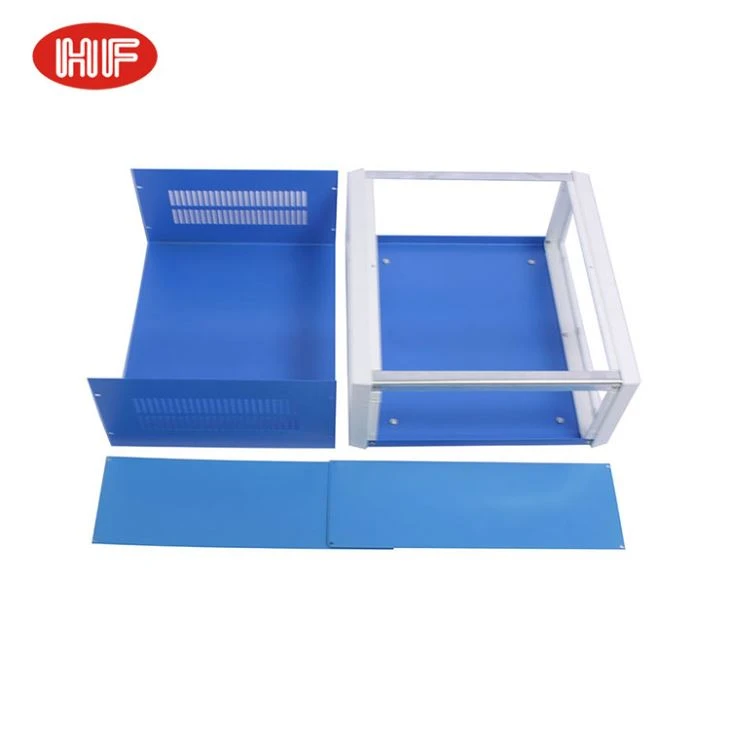
There are some sheet metal products that are worth mentioning. For example, the Aluminum Motherboard Rack Mount Server Computer Case is a great option if you're looking for a high - quality, custom - made case. It offers good protection for your server components and is designed to fit neatly into a 1U rack. The Sheet metal Aluminium Enclosure Raspberry Pi 4 Case is another interesting product. It's specifically designed for Raspberry Pi 4, which is a popular single - board computer, and it can be easily integrated into a server rack. And the Sheet metal enclosure aluminum Special shape iron stainless steel case provides a unique and stylish option for housing your equipment.
Plastic
Plastic is sometimes used in 1U server racks, although it's not as common as steel, aluminum, or sheet metal. One of the main advantages of plastic is its low cost. It's one of the cheapest materials you can use, which makes it an attractive option if you're on a really tight budget. Plastic is also lightweight, which can be beneficial for easy handling and installation.
Plastic is also a good insulator. It can help reduce the amount of electromagnetic interference (EMI) that can affect the performance of servers. This can be especially important in a high - tech environment where you need to ensure the stability and reliability of the equipment.
But plastic has its limitations. It's not as strong as metal, so it might not be able to hold as much weight. It's also more prone to damage from heat and physical impact. In a server rack environment where there's a lot of heat and potential for accidental bumps, plastic might not hold up as well as other materials.
Wood
Wood is an old - school material that's rarely used in modern 1U server racks, but it does have some unique characteristics. Wood is a natural insulator, which can help keep the servers cool. It also has a warm and aesthetically pleasing look, which might be desirable in some office or home settings.

However, wood has some major drawbacks. It's not very strong compared to metal, so it's not suitable for holding a large number of heavy servers. It's also flammable, which is a huge safety concern in a data center environment where there's a lot of electrical equipment. And wood can be affected by humidity and pests, which can cause it to deteriorate over time.
So, there you have it! These are the common materials used for 1U server racks. Each material has its own pros and cons, and the choice of material depends on your specific needs, budget, and the environment in which the racks will be used. If you're in the market for 1U server racks and want to learn more about which material is right for you, or if you're interested in our products, don't hesitate to reach out. We're here to help you make the best decision for your server rack needs.
References
- General knowledge about server rack materials from industry experience
- Information from various server rack manufacturers and industry publications


