


Selecting the right press brake for bending sheet metal parts is a critical decision for any sheet metal parts supplier. As a seasoned sheet metal parts supplier, I understand the significance of this choice in ensuring high - quality products, efficient production, and cost - effectiveness. In this blog, I'll share some key factors to consider when choosing a press brake.

Understanding Your Production Requirements
The first step in selecting the right press brake is to have a clear understanding of your production requirements. This includes the types of sheet metal parts you produce, the volume of production, and the complexity of the bends.
Part Types
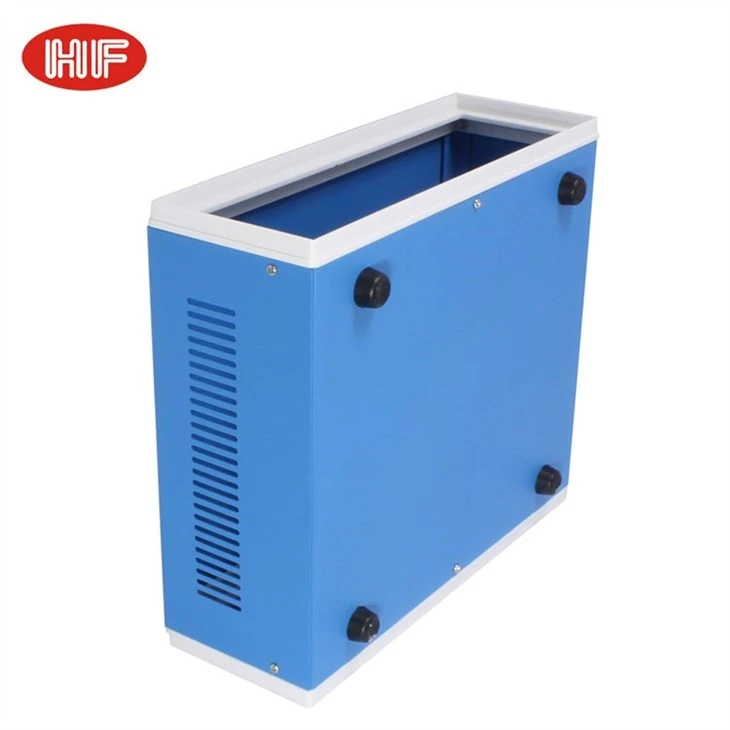
The nature of the sheet metal parts you manufacture plays a vital role. For instance, if you are mainly producing Aluminum Enclosure Sheet Metal Rack Mount case, which often requires precise and uniform bends to fit into rack systems, you need a press brake that can offer high - precision bending. On the other hand, if your production involves Metal Case Battery Housing Steel Box, which may have thicker material and more complex shapes, a press brake with higher tonnage and advanced tooling capabilities will be necessary.
Production Volume
Your production volume also dictates the type of press brake you should choose. For low - volume production, a manual or semi - automatic press brake might be sufficient. These machines are more affordable and easier to operate, making them ideal for small - scale production. However, for high - volume production, a fully automatic press brake is a better option. Automatic press brakes can significantly increase productivity by reducing setup times and increasing bending speed. They can also maintain consistent quality over long production runs.
Bend Complexity
The complexity of the bends required for your parts is another important consideration. Simple 90 - degree bends are relatively easy to achieve with most press brakes. But if your parts require multiple bends, acute angles, or complex geometries, you'll need a press brake with advanced programming capabilities. Some modern press brakes come with 3D simulation software that allows you to visualize the bending process and ensure accurate results before starting production. This is especially useful when producing Factory Suppliers Aluminum Extruded Electronic Housing Electronic Devices, which often have intricate shapes.
Press Brake Tonnage
Press brake tonnage refers to the amount of force the machine can apply to bend the sheet metal. Selecting the right tonnage is crucial to ensure proper bending without damaging the material or the machine.
Calculating Tonnage
The required tonnage depends on several factors, including the material type, thickness, and the length of the bend. Generally, thicker and harder materials require more tonnage. There are tonnage calculators available that can help you determine the appropriate tonnage based on these factors. As a rule of thumb, it's better to choose a press brake with slightly higher tonnage than the calculated value to account for any variations in material properties and to ensure smooth operation.
Over - Tonnage and Under - Tonnage Risks
Using a press brake with insufficient tonnage can result in incomplete bends, uneven bending, or damage to the tooling. On the other hand, using a press brake with excessive tonnage can cause the material to crack, deform, or even damage the machine itself. Therefore, accurate tonnage selection is essential for both product quality and machine longevity.
Bending Length
The bending length of a press brake is the maximum length of the sheet metal that the machine can bend in a single pass. It's important to choose a press brake with a bending length that matches your production needs.
Matching Bending Length to Parts
If you primarily produce small - sized parts, a press brake with a shorter bending length may be sufficient. However, if you deal with large - scale sheet metal parts, such as large enclosures or panels, you'll need a press brake with a longer bending length. Keep in mind that longer bending lengths usually require higher tonnage machines to ensure uniform bending across the entire length.
Considerations for Future Growth
When selecting a press brake, it's also a good idea to consider your future production plans. If you anticipate an increase in the size of your parts or an expansion of your product line, it may be wise to invest in a press brake with a slightly longer bending length than your current requirements. This will give you the flexibility to adapt to changing market demands.
Tooling and Accessories
The tooling and accessories of a press brake can greatly affect the quality and efficiency of the bending process.
Tooling Types
There are various types of press brake tooling available, including V - dies, punches, and special - purpose tools. The choice of tooling depends on the type of bends you need to make. For example, different V - die widths are used for different material thicknesses and bend angles. It's important to choose high - quality tooling that is compatible with your press brake to ensure accurate and consistent bending.
Accessories
In addition to tooling, there are several accessories that can enhance the functionality of a press brake. These include back gauges, which help position the sheet metal accurately for bending; crowning systems, which compensate for the deflection of the press brake frame during bending; and safety devices, such as light curtains and two - hand controls, which protect the operator from injury. When choosing a press brake, consider which accessories are necessary for your specific production requirements.
Machine Accuracy and Repeatability
Accuracy and repeatability are two important performance indicators of a press brake.
Accuracy
Accuracy refers to how closely the actual bend angle and dimensions match the desired values. High - accuracy press brakes are essential for producing parts with tight tolerances. Modern press brakes use advanced control systems and sensors to achieve high levels of accuracy. For example, some machines can control the bend angle within a few tenths of a degree.
Repeatability
Repeatability is the ability of the press brake to produce consistent bends over multiple cycles. Good repeatability is crucial for mass production, as it ensures that all parts are identical. Press brakes with high - quality mechanical components, precise control systems, and proper calibration can achieve excellent repeatability.
Operator Skill and Training
The skill level of your operators and the availability of training can also influence your press brake selection.
Operator Skill Requirements
Some press brakes, especially manual and semi - automatic ones, require a higher level of operator skill. Operators need to have a good understanding of sheet metal properties, bending techniques, and tooling selection. On the other hand, fully automatic press brakes are more user - friendly and require less operator skill. However, even with automatic machines, operators still need to be trained to operate the control system, load and unload materials, and perform basic maintenance.
Training Availability
When purchasing a press brake, it's important to consider the training options provided by the manufacturer. Some manufacturers offer on - site training, online tutorials, or training courses at their facilities. Adequate training will ensure that your operators can use the press brake safely and efficiently, which in turn will improve product quality and productivity.
Cost and Return on Investment (ROI)
Cost is always a major consideration when purchasing a press brake. However, it's important to look beyond the initial purchase price and consider the long - term return on investment.
Initial Purchase Price
The initial purchase price of a press brake can vary widely depending on its features, capabilities, and brand. While it may be tempting to choose the cheapest option, it's important to balance cost with quality and performance. A low - cost press brake may have lower accuracy, reliability, and productivity, which can result in higher production costs in the long run.
Operating Costs
In addition to the initial purchase price, you also need to consider the operating costs of the press brake. These include energy consumption, tooling costs, maintenance costs, and labor costs. For example, an energy - efficient press brake can significantly reduce your electricity bills over time. Similarly, high - quality tooling may have a higher upfront cost but can last longer and produce better - quality bends, reducing the need for frequent replacement.
ROI Calculation
To determine the ROI of a press brake, you need to consider the increase in productivity, the improvement in product quality, and the reduction in production costs. A press brake that can increase your production volume, reduce scrap rates, and improve part quality can provide a significant return on investment over its lifespan.
Conclusion
Selecting the right press brake for bending sheet metal parts is a multi - faceted decision that requires careful consideration of various factors. By understanding your production requirements, choosing the appropriate tonnage and bending length, selecting high - quality tooling and accessories, ensuring machine accuracy and repeatability, considering operator skill and training, and evaluating the cost and ROI, you can make an informed decision that will benefit your business in the long run.
If you are interested in purchasing a press brake for your sheet metal production or have any questions about our sheet metal parts, please feel free to contact us for further discussion. We are committed to providing high - quality products and professional solutions to meet your needs.
References
- ASM Handbook, Volume 14A: Metalworking: Bulk Forming. ASM International.
- Die Design Handbook. Society of Manufacturing Engineers.
- Press Brake Operator's Manuals from leading manufacturers.


