


Hey there! As a supplier of 1U server chassis, I often get asked this question: "Can a 1U server chassis support high - end graphics cards?" It's a valid question, especially considering the increasing demand for high - performance computing in various industries. Let's dig into this topic and find out the answer.

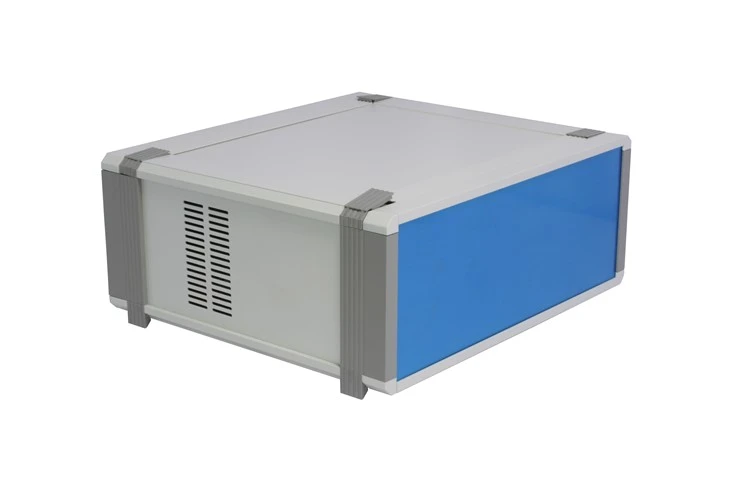
First off, let's understand what a 1U server chassis is. A 1U server chassis is a type of server enclosure that follows the 1U form factor. In the server world, "U" stands for "rack unit," and 1U is equal to 1.75 inches (44.45 mm) in height. These chassis are designed to be compact and stackable in a standard server rack, which is great for data centers where space is at a premium.
On the other hand, high - end graphics cards are powerhouses. They're designed to handle complex graphical tasks like gaming, 3D modeling, video editing, and artificial intelligence applications. These cards usually come with large heatsinks, multiple fans, and high power consumption requirements.
Now, the big question: can a 1U server chassis support them? Well, it's not a straightforward yes or no answer.
Physical Constraints
One of the main issues is the physical size. High - end graphics cards are often quite large. They can be long, tall, and wide, which may not fit well into a 1U server chassis. A 1U chassis has a very limited height, and most high - end graphics cards are taller than the 1.75 - inch limit. For example, some of the latest NVIDIA GeForce RTX series cards are designed for desktop systems and have a height that far exceeds the 1U space.
Moreover, these cards need proper ventilation to prevent overheating. A 1U chassis is so compact that it may not have enough room to accommodate the large heatsinks and fans that high - end graphics cards require. Inadequate ventilation can lead to thermal throttling, where the graphics card reduces its performance to avoid overheating. This can significantly impact the overall performance of the system.
Power Supply
High - end graphics cards are power - hungry. They can draw a large amount of power, sometimes over 200 watts or even more. A 1U server chassis typically comes with a power supply unit (PSU) that is designed to meet the power requirements of the standard server components like the CPU, memory, and hard drives. The built - in PSU may not be able to provide enough power to support a high - end graphics card. Adding an external power supply can be a solution, but it adds complexity and takes up additional space.
Compatibility
Even if a high - end graphics card physically fits into a 1U server chassis and there's enough power, there may still be compatibility issues. The motherboard in a 1U server chassis needs to have the right PCIe slot to support the graphics card. Some 1U server motherboards may have limited or no PCIe slots at all, or the available slots may not be of the right type or speed to fully utilize the capabilities of a high - end graphics card.
However, There Are Solutions
Despite these challenges, there are some workarounds. Some manufacturers have started to develop specialized 1U server chassis that are designed to support high - end graphics cards. These chassis are engineered with features like custom - designed cooling systems, high - wattage power supplies, and motherboard configurations that can accommodate the graphics cards.
For example, some 1U server chassis use liquid - cooling technology to provide better heat dissipation for the graphics cards. Liquid - cooling can be more efficient than traditional air - cooling methods, allowing the graphics cards to operate at optimal performance even in a compact space.
Another option is to use low - profile or half - height graphics cards. These cards are designed to be more compact and can fit into a 1U server chassis more easily. While they may not offer the same level of performance as full - sized high - end graphics cards, they can still provide a decent amount of graphical processing power for less demanding applications.
Our Offerings
As a 1U server chassis supplier, we understand these challenges and have developed solutions to address them. We offer a range of 1U server chassis that are designed with flexibility in mind. Our chassis can be customized to support different types of components, including high - end graphics cards.
We also provide various accessories to enhance the performance of the chassis. For example, we have Sheet Metal Box Remote Controller Case that can be used to house additional control components. Our Aluminum Profiles Communication Industry Electronic Medical Equipment Testing Chassis Enclosure is made of high - quality aluminum profiles, which can provide better structural support and heat dissipation. And our Sheet Metal Case Aluminum Raspberry Steel Box is perfect for housing small - sized components.
Why Choose Us
When you choose our 1U server chassis, you're getting a product that is built with quality and performance in mind. Our chassis are made from high - grade materials and are rigorously tested to ensure reliability. We also offer excellent customer service and technical support. Whether you're a small business or a large data center, we can work with you to find the right solution for your needs.
If you're interested in using high - end graphics cards in your 1U server setup, don't hesitate to contact us. We can help you select the right chassis, provide advice on compatibility, and assist with any customization requirements. We're here to make your server infrastructure as efficient and powerful as possible.
Conclusion
In conclusion, while it's challenging for a standard 1U server chassis to support high - end graphics cards, it's not impossible. With the right design, technology, and components, it can be done. As a 1U server chassis supplier, we're committed to providing innovative solutions to meet the evolving needs of our customers. If you have any questions or are interested in our products, feel free to reach out to us for a consultation. We're looking forward to working with you to build the perfect server setup for your business.
References
- Server Hardware Basics: Understanding Rack Units and Form Factors. Server Technology Guides.
- Graphics Card Specifications and Power Requirements. NVIDIA and AMD Official Websites.
- Research on Compact Server Cooling Technologies. Journal of Data Center Efficiency.


