


Hey there! As a supplier of 1U server chassis, I often get asked this question: "Can a 1U server chassis be used for rack - mount storage?" Well, let's dive right into it and break it down.
First off, what exactly is a 1U server chassis? A 1U server chassis is a type of server enclosure that's designed to fit into a standard 19 - inch rack. The "1U" refers to its height, which is 1.75 inches (44.45 mm). These chassis are popular because they save space in data centers and server rooms. They're typically used for servers that need to be stacked vertically in a rack, making efficient use of limited floor space.
Now, onto the big question: can it be used for rack - mount storage? The short answer is yes, it can, but there are some things to consider.

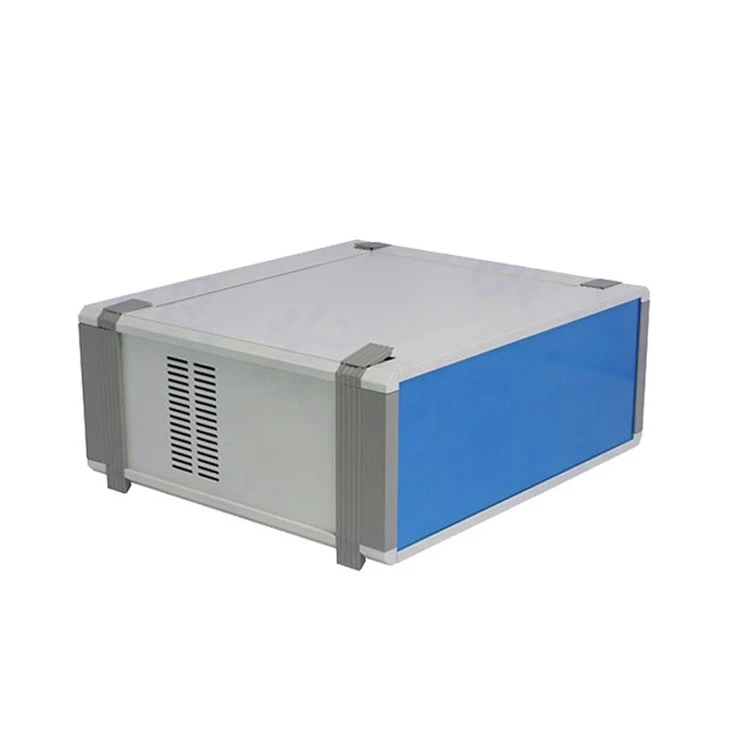
Advantages of Using a 1U Server Chassis for Rack - Mount Storage
Space Efficiency
One of the biggest advantages is the space savings. In a data center where every inch counts, a 1U chassis allows you to pack a lot of storage into a small footprint. You can stack multiple 1U storage units in a single rack, increasing your storage capacity without taking up too much floor space. This is especially important for businesses that are looking to expand their storage capabilities but don't have a lot of room to spare.
Cost - Effectiveness
1U server chassis are generally more affordable compared to larger storage enclosures. If you're on a budget, using a 1U chassis for storage can be a great option. You can get a decent amount of storage space at a relatively low cost, which is ideal for small and medium - sized businesses.
Compatibility
Most 1U server chassis are designed to be compatible with standard rack - mount equipment. This means you can easily integrate your storage solution into an existing rack infrastructure. You don't have to worry about making major modifications to your rack or other components, which saves time and money.
Limitations of Using a 1U Server Chassis for Rack - Mount Storage
Limited Storage Capacity
The main limitation of a 1U server chassis is its limited storage capacity. Due to its small size, it can only accommodate a limited number of hard drives or solid - state drives (SSDs). Typically, a 1U chassis can hold anywhere from 2 to 8 drives, depending on the design. If you need a large amount of storage, you may need to use multiple 1U chassis or consider a larger enclosure.
Cooling Challenges
Another issue is cooling. With multiple drives packed into a small space, heat dissipation can be a problem. Overheating can lead to reduced performance and even drive failures. You need to make sure that your 1U chassis has adequate cooling mechanisms, such as fans or heat sinks. Some 1U chassis are designed with better cooling in mind, but it's still something to keep in check.
Power Constraints
1U server chassis also have power limitations. They usually have a lower power supply capacity compared to larger enclosures. This means that you need to be careful about the types of drives you use and how many you install. High - performance drives can consume a lot of power, and if you exceed the power supply capacity, it can cause stability issues.
Factors to Consider When Using a 1U Server Chassis for Rack - Mount Storage
Drive Type
When choosing drives for your 1U storage solution, you need to consider the type of drive. SSDs are a popular choice because they are faster, more reliable, and generate less heat compared to traditional hard drives. However, they are also more expensive. If you're on a budget, you may opt for hard drives, but keep in mind that they require more power and generate more heat.
RAID Configuration
RAID (Redundant Array of Independent Disks) is a technology that allows you to combine multiple drives into a single logical unit for increased performance, reliability, or both. When using a 1U server chassis for storage, you need to choose the right RAID configuration based on your needs. For example, RAID 0 provides increased performance but no data redundancy, while RAID 1 provides data redundancy but no performance increase.
Management and Monitoring
It's important to have a good management and monitoring system in place for your 1U storage solution. This allows you to keep track of the health and performance of your drives, as well as the overall system. You can use software tools to monitor temperature, power consumption, and drive status.
Our 1U Server Chassis Offerings
As a supplier of 1U server chassis, we offer a range of high - quality products that are suitable for rack - mount storage. Our chassis are designed with space efficiency, cooling, and compatibility in mind. We use high - quality materials to ensure durability and reliability.
If you're interested in other related products, we also have Electronic Aluminum Control Box Sheet Metal Enclosure, Aluminum sheet case set top box, and Newest Aluminum Chassis Box In China. These products are designed to meet the diverse needs of our customers.
Conclusion
In conclusion, a 1U server chassis can be used for rack - mount storage, but it has its advantages and limitations. If you have limited space and a budget, it can be a great option. However, you need to carefully consider factors such as storage capacity, cooling, and power consumption.
If you're interested in our 1U server chassis or any of our other products, feel free to reach out to us for a detailed discussion. We're here to help you find the best storage solution for your needs. Let's start a conversation and see how we can work together to meet your storage requirements.
References
- "Server Hardware Basics" by TechTarget
- "Rack - Mount Storage Systems: A Comprehensive Guide" by StorageReview


