


In the ever-evolving landscape of data centers and server technology, the question of whether a 1U chassis can support high-performance hardware is a topic of significant interest. As a 1U chassis supplier, I've witnessed firsthand the advancements and challenges in this area. In this blog post, I'll delve into the capabilities of 1U chassis, explore the factors that determine their ability to support high-performance hardware, and provide insights based on my experience in the industry.
Understanding 1U Chassis
Before we discuss whether a 1U chassis can support high-performance hardware, it's essential to understand what a 1U chassis is. In the context of server racks, "U" refers to a unit of measurement equal to 1.75 inches (44.45 mm). A 1U chassis is, therefore, a server chassis that occupies one unit of vertical space in a standard rack. These chassis are known for their compact size, which allows for high-density deployment in data centers.
The compact design of 1U chassis makes them popular for applications where space is at a premium, such as colocation facilities, cloud computing environments, and enterprise data centers. However, the limited physical space within a 1U chassis poses challenges when it comes to accommodating high-performance hardware components.
Factors Affecting the Ability to Support High-Performance Hardware
Several factors determine whether a 1U chassis can support high-performance hardware. These factors include thermal management, power delivery, component compatibility, and expansion capabilities.
Thermal Management
One of the most critical challenges in a 1U chassis is managing the heat generated by high-performance hardware. High-performance processors, graphics cards, and other components produce a significant amount of heat, which can lead to thermal throttling and reduced performance if not properly dissipated.
To address this challenge, 1U chassis are equipped with advanced cooling solutions, such as high-speed fans, heat sinks, and liquid cooling systems. These cooling solutions are designed to efficiently remove heat from the components and maintain optimal operating temperatures. However, the effectiveness of these cooling solutions is limited by the available space within the chassis. As a result, careful consideration must be given to the placement of components and the airflow path within the chassis to ensure adequate cooling.

Power Delivery
High-performance hardware components require a significant amount of power to operate. In a 1U chassis, the limited space restricts the size and capacity of the power supply unit (PSU). This can make it challenging to provide sufficient power to all the components, especially when multiple high-power components are installed.
To overcome this challenge, 1U chassis are often equipped with high-efficiency PSUs that can deliver a large amount of power in a compact form factor. Additionally, some 1U chassis support redundant power supplies, which provide backup power in case of a failure. However, even with these solutions, the power requirements of high-performance hardware must be carefully considered to ensure that the PSU can meet the demands of the system.
Component Compatibility
Another factor that affects the ability of a 1U chassis to support high-performance hardware is component compatibility. High-performance components often have specific form factors, power requirements, and cooling needs that may not be compatible with the limited space and resources of a 1U chassis.
For example, some high-performance graphics cards are too large to fit in a 1U chassis, while others may require more power than the PSU can provide. Similarly, some high-end processors may generate too much heat to be effectively cooled within the confines of a 1U chassis. Therefore, it's essential to carefully select components that are compatible with the 1U chassis and its specifications.
Expansion Capabilities
High-performance hardware often requires additional expansion slots for adding components such as network cards, storage controllers, and graphics cards. However, the limited space within a 1U chassis restricts the number of expansion slots available.
To address this limitation, some 1U chassis are designed with innovative expansion solutions, such as riser cards and daughterboards. These solutions allow for the addition of additional components without taking up too much space within the chassis. However, the expansion capabilities of a 1U chassis are still limited compared to larger chassis, and careful planning is required to ensure that the system can be expanded as needed.
Examples of High-Performance Hardware Supported by 1U Chassis
Despite the challenges, there are many examples of high-performance hardware that can be supported by 1U chassis. These include:
- High-Performance Processors: Many modern 1U chassis are designed to support high-end processors, such as Intel Xeon Scalable processors and AMD EPYC processors. These processors offer high performance and multi-core capabilities, making them suitable for a wide range of applications, including virtualization, data analytics, and artificial intelligence.
- Solid-State Drives (SSDs): SSDs are becoming increasingly popular in 1U chassis due to their high performance, low power consumption, and reliability. Many 1U chassis support multiple SSDs, allowing for high-speed storage and data access.
- Network Interface Cards (NICs): High-performance NICs are essential for data centers and server applications. Many 1U chassis support multiple NICs, providing high-speed network connectivity and bandwidth.
- Graphics Processing Units (GPUs): While GPUs are typically larger and more power-hungry than other components, some 1U chassis are designed to support low-profile GPUs. These GPUs can be used for applications such as machine learning, video transcoding, and virtual reality.
Our 1U Chassis Solutions
As a 1U chassis supplier, we offer a range of high-quality chassis solutions that are designed to support high-performance hardware. Our chassis are built with advanced thermal management systems, high-efficiency power supplies, and innovative expansion solutions to ensure optimal performance and reliability.
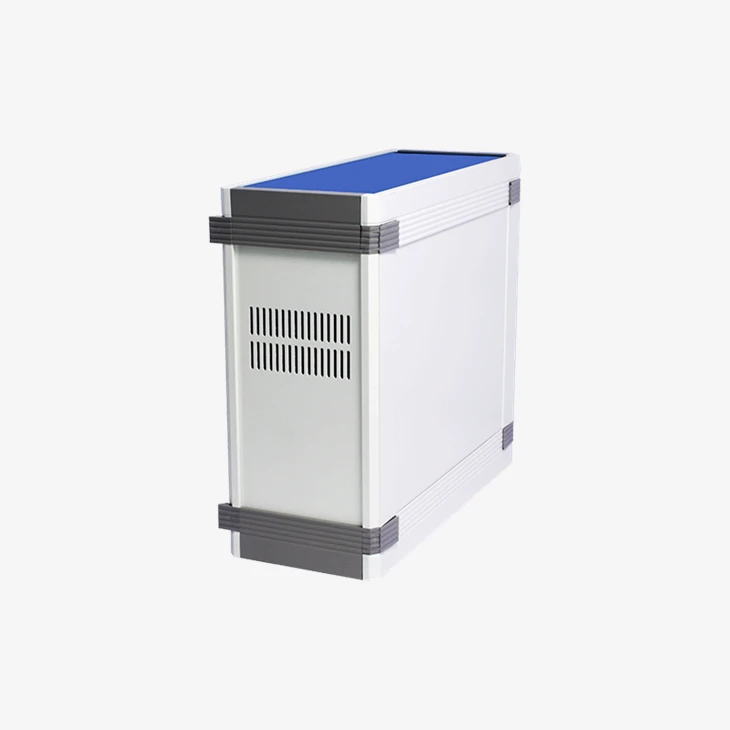
For example, our Aluminum Enclosure Chassis Junction Box is a compact and durable chassis that is ideal for high-density applications. It features a high-speed fan and a heat sink to provide efficient cooling, as well as a redundant power supply for added reliability.
Our Sheet Metal Enclosure Electronic Case is another popular option for 1U chassis. It offers a modular design that allows for easy customization and expansion, as well as a high-efficiency PSU to provide sufficient power to the components.
In addition, our Aluminium Enclosures Are Widely Used in Communication Metro Projects are designed to meet the specific requirements of communication and networking applications. They feature a robust construction, advanced cooling solutions, and a wide range of expansion options.
Conclusion
In conclusion, while the limited space within a 1U chassis poses challenges, it is possible to support high-performance hardware in a 1U chassis with careful planning and the right components. Thermal management, power delivery, component compatibility, and expansion capabilities are all important factors to consider when designing a 1U chassis for high-performance applications.
As a 1U chassis supplier, we are committed to providing our customers with high-quality chassis solutions that meet their specific needs. Our chassis are designed to support the latest high-performance hardware components and are built with advanced features and technologies to ensure optimal performance and reliability.
If you're interested in learning more about our 1U chassis solutions or have any questions about supporting high-performance hardware in a 1U chassis, please feel free to contact us. We'd be happy to discuss your requirements and provide you with a customized solution.
References
- Intel. (n.d.). Intel Xeon Scalable processors. Retrieved from [Intel website]
- AMD. (n.d.). AMD EPYC processors. Retrieved from [AMD website]
- Seagate. (n.d.). Solid-state drives. Retrieved from [Seagate website]
- Mellanox. (n.d.). Network interface cards. Retrieved from [Mellanox website]
- NVIDIA. (n.d.). Graphics processing units. Retrieved from [NVIDIA website]


